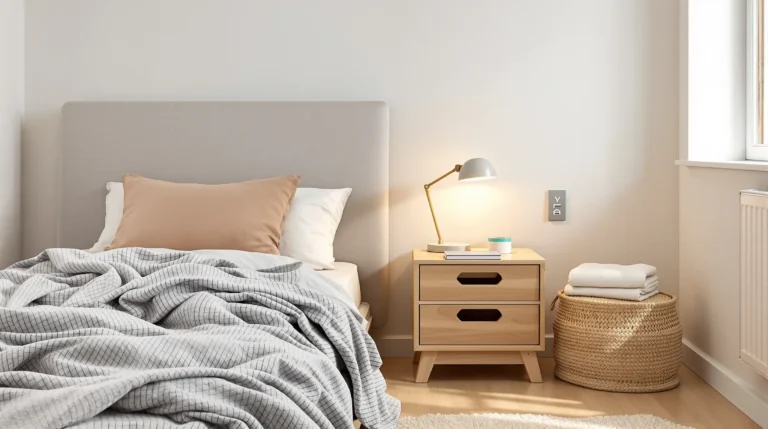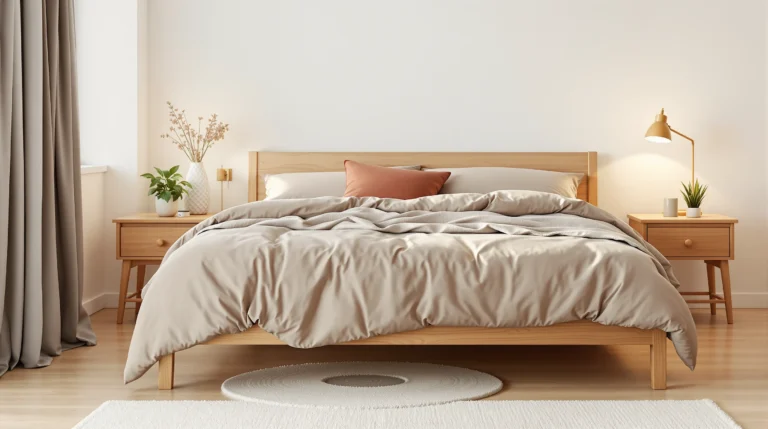
23 Small Guest Bedroom Ideas (Even in a Tiny Apartment)
The guest-bed shame spiral is real. In a 2026 survey of 1,011 hosts, 40% said they felt embarrassed by their guest sleeping setup — and a full third had avoided inviting people to stay because of it (Amerisleep Guest Bed Report). Most of us aren't working with a spare room at all: only 27% of apartment dwellers have one (YouGov). So this guide is built on one rule the pretty photo roundups skip: match the guest bed to how often you actually host, and design the room around the job it does the other 360 nights. Here are 23 small guest bedroom ideas — with the sizes, costs, and honest trade-offs — from the frequency framework to a 15-minute guest-ready system. It's the guest-hosting companion to our small bedroom ideas guide, which covers the general storage, layout, and make-it-bigger groundwork.
Key Takeaways
- Design for the other 360 nights first — a guest room that earns its footprint daily beats a shrine that waits (only 31% of spare rooms even function as guest rooms — YouGov).
- Match the sleeper to your hosting frequency: a few nights a year → a double-height air mattress; monthly-ish → a daybed or trundle; constant hosting → a sofa bed, or a murphy bed if you own.
- Know the real numbers: a daybed like IKEA's HEMNES runs about $399 and pulls out to a 76¾-inch-wide double, while a murphy bed averages around $3,000 installed and anchors into wall studs — an owner project (prices checked July 2026; verify before you shop).
- Keep a 15-minute guest-ready system: a bedding cache, a luggage landing spot, charging by the pillow — and sleep the "hotel test" night in your own setup once.
What makes a small guest bedroom work?
Three decisions, made in order. First: how many guest-nights a year you honestly host — that number picks the sleeper. Second: what the room does the other 360 nights — that designs the room. Third: a comfort bar you've personally slept, so nobody discovers the sagging middle or the dead outlet before you do. Every idea below serves one of those three; none of them requires a bigger apartment.
Start with the frequency framework (1–3)
Guest rooms fail when they're designed for an imaginary hosting schedule. Start with the real one.
1. Count your real guest-nights
Be honest: how many nights did someone actually sleep over last year? That number is the whole decision. Five nights or fewer: skip furniture entirely — a quality double-height air mattress or a fold-away floor futon plus a bedding cache wins on every axis. Six to fifteen nights: a daybed or a trundle gives real-mattress comfort in a footprint that works daily. Fifteen-plus nights: you're running a part-time hotel — a proper sofa bed (if the room is a living room) or a murphy bed (if you own, in a dedicated flex room) earns its cost. Everything else in this guide hangs off this one count.
2. Design for the other 360 nights first
Here's what actually happens to spare rooms: among Americans who have one, only 31% use it as a guest room — 18% surrendered it to storage and another 18% turned it into a home office (YouGov, 2025). That's not failure; that's the math of small homes. So flip the design brief: build the room around its daily job — office, reading room, workout corner — and let the guest function convert into it. A room you use every day and can flip in fifteen minutes beats a dedicated guest room that slowly fills with boxes.
3. Set the comfort bar with the hotel test
In the same Amerisleep survey, 27% of guests said a bad night's sleep made them think twice about returning. The fix costs nothing: sleep one full night in your own guest setup before anyone else does. You'll find the crossbar you can feel through the sofa-bed mattress, the streetlight the curtain misses, and the outlet that's a room away from the pillow — while they're still your problems, not your guest's story.
Pick the right sleeper — with the real numbers (4–9)
This is the part the photo roundups skip: what each option really measures, costs, and feels like. (Prices below were checked July 2026 — verify before you shop.)
4. The daybed — the small-space workhorse
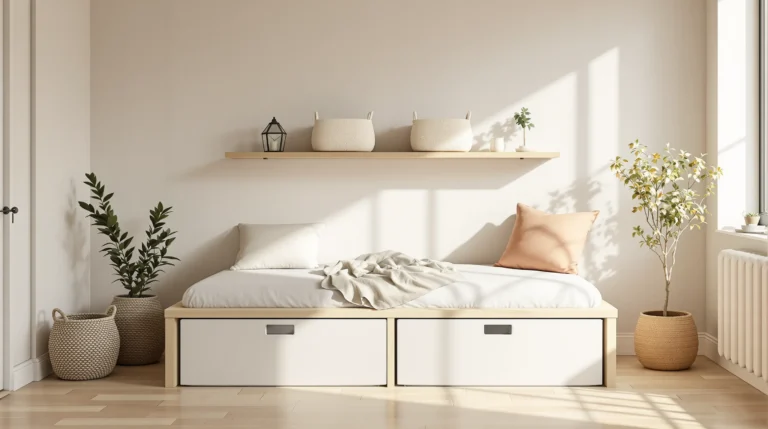
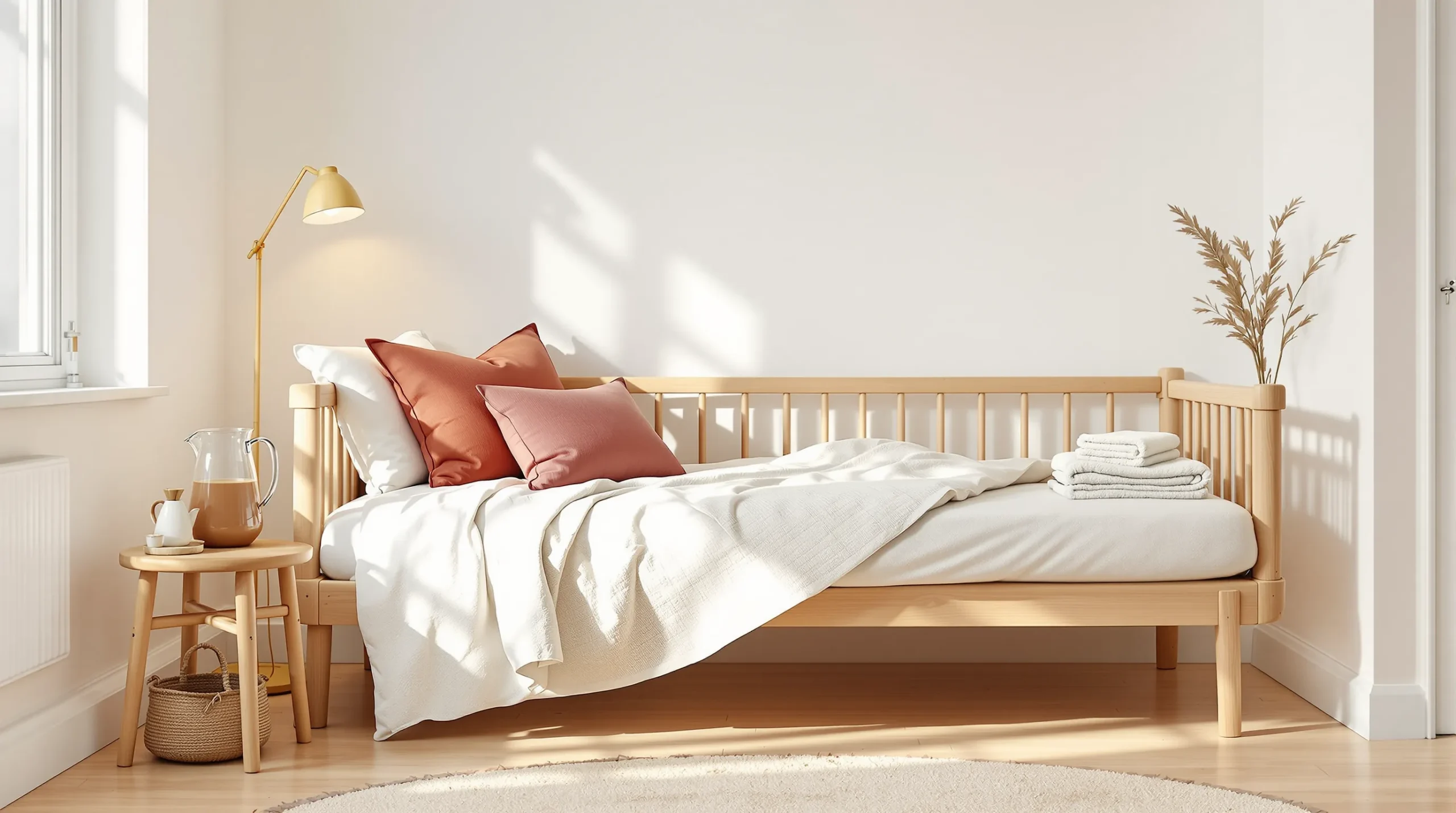
A daybed is the honest hero of small guest rooms: a real sofa by day, a real twin bed by night, no mechanism to fight. The benchmark spec — IKEA's HEMNES class — runs about $399, sits 41⅜ inches deep against the wall, and pulls out into a 76¾-inch-wide double built from two twin mattresses (IKEA). Two things to know: that opened double is wider than a king, so check your walk-around space against the clearance tables in our couples bedroom guide before committing — and the three drawers underneath (rated 44 lb each) are a built-in bedding cache, which matters in idea 21.
Here's how the main guest sleepers compare at a glance:
| Sleeper | Footprint (closed → open) | Mattress reality | Best for | Renter-safe? |
|---|---|---|---|---|
| Daybed (~$399) | 41⅜" deep → pulls out to a 76¾" double | Real twin, full depth | Regular hosting + daily sofa | Yes — freestanding |
| Trundle | Hidden under a bed → + one twin | Low-profile, ~5–8" | Occasional 2nd guest | Yes |
| Sofa bed (~$799) | 88⅝" sofa → 56¾×78⅜ bed | Fold mattress ~4–5" | Frequent, in a daily living room | Yes |
| Murphy bed | Cabinet on wall → full/queen + clearance | Standard, full depth | Frequent, dedicated flex room | No — studs + $2–4K = owner |
| Air mattress | Closet shelf → 80×60×19" | Double-height, 500 lb | Rare (a few nights/year) | Yes |
| Floor futon | Rolls to shelf depth → twin/full | Cotton, varies | Rare, minimalist studios | Yes |
Footprint/cost figures from IKEA, Fixr, and SoundAsleep (checked July 2026); comfort and frequency fit are editorial.
5. The trundle — a second twin in zero footprint
A trundle hides a whole second bed under the first and rolls out only when needed — the classic answer for hosting a couple or a kid-plus-parent visit. The honest catch: trundles take a low-profile mattress, typically 5 to 8 inches depending on the frame, so measure yours before buying the mattress, not after. Bedding stays cached elsewhere; the trundle itself stores nothing.
6. The sofa bed — for rooms that are living rooms daily
If your "guest room" is the living room, a proper sofa bed beats every improvised couch arrangement. The benchmark: IKEA's FRIHETEN class at about $799 — an 88⅝-inch sofa that opens to a 56¾ × 78⅜-inch bed with storage in the chaise (IKEA). Honesty about the mattress: fold-mechanism mattresses run around 4 to 5 inches thick — genuinely fine for a weekend, not something to promise anyone for a month. (For how these transforming pieces actually work — and which are worth it — see our space-saving furniture teardowns.)
7. The murphy bed — the honest owner call
Murphy beds are the fantasy answer — a full-depth mattress that vanishes vertically — and for frequent hosts with a dedicated flex room they're genuinely great. But here's what the inspiration posts omit: a typical murphy bed runs $2,000 to $4,000 installed (about $3,000 on average) and anchors into wall studs or the floor (Fixr). That's an owner's project, full stop. Renters get the same disappearing-bed effect from a freestanding cabinet bed or the daybed in idea 4 — and our DIY guide covers what renters can and can't safely mount.
8. The quality air mattress — rare-hosting champion
If you host a few nights a year, the right answer isn't furniture — it's a good air mattress, and the spec bar matters. Look for double-height (~19 inches), around 500 pounds of capacity, and a built-in pump — the SoundAsleep Dream Series class (spec page) — which sits at real-bed height instead of camping-pad height. Upgrading from a borrowed camping pad to a double-height model was the single biggest jump in how our own guests slept; with fitted sheets and a real duvet from the cache, first-time visitors have asked if it was a bed. Fine for two to four nights; don't promise anyone a month on it.
9. The floor futon — the Japandi option
A folding floor futon rolls down to shelf depth and comes in standard twin and full sizes (twin runs 38×75 inches — Sleep Foundation). It's the most honest minimalist answer for rare hosting in a studio: a real cotton-mattress sleep, zero furniture footprint, and it airs out and disappears in the morning.
Make the office/guest combo work daily (10–13)
The office/guest combo is the most common small-space guest room — and most people design it backwards.
10. Put the desk first, bed second
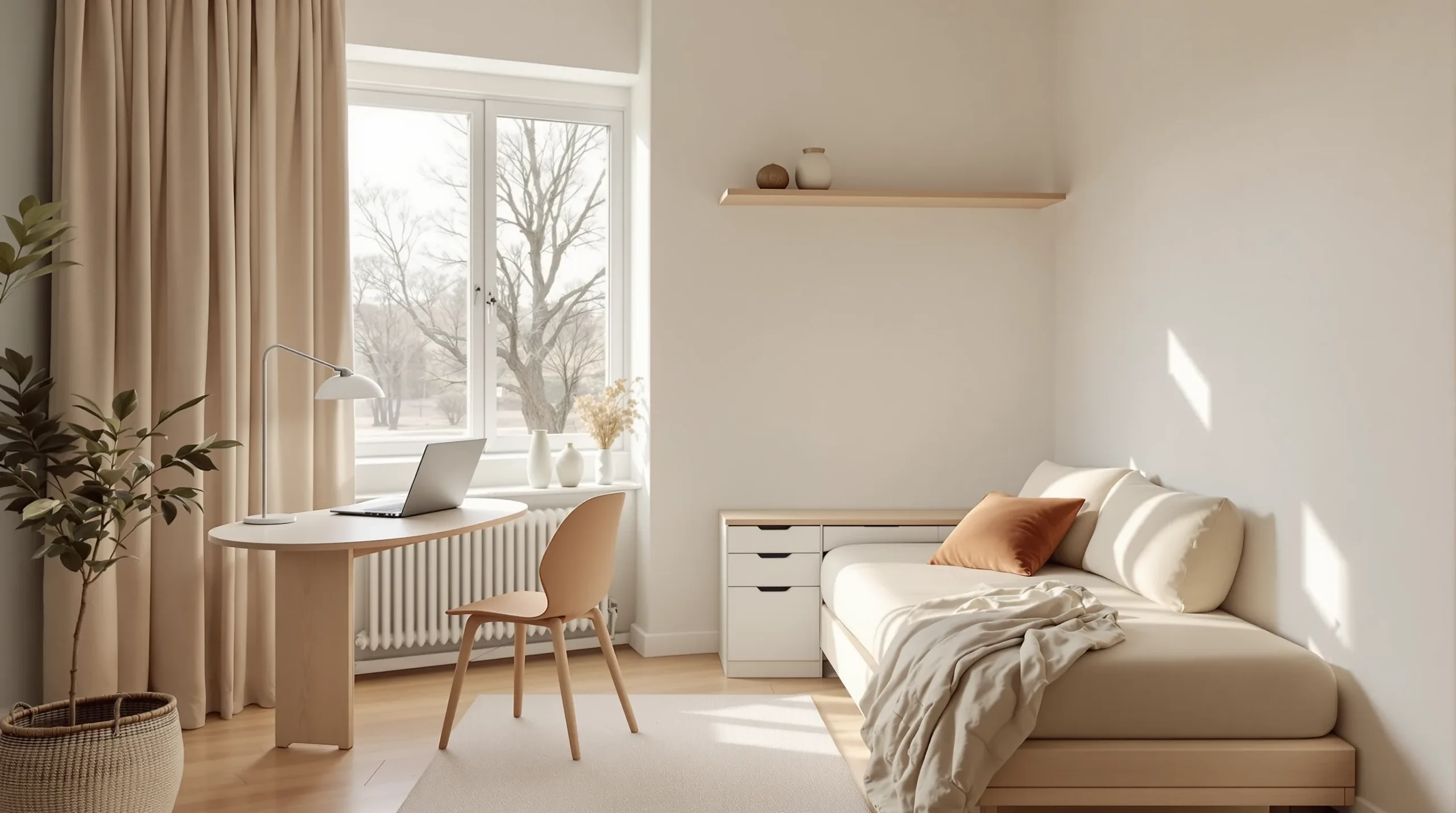
Design the office you'll use 250 days a year, then choose the sleeper that fits around it — not the other way. A bedroom with a desk squeezed in dies as both; an office with a daybed along one wall works as both. (For the desk side — placement, ergonomics, the nook setups — see our small home office ideas.)
11. Let the daybed be the office sofa
The neatest version of the combo has zero conversion at all: the daybed is the office's reading-and-thinking seat all year, and a made-up twin the nights someone stays. One piece, two jobs, no mechanism, no drama — this is why the daybed wins idea 4 for most rooms.
12. Plan the guest-week conversion
Decide in advance where the office goes when a guest arrives: the chair rolls to the closet, the desk clears into one tray, the laptop docks at the kitchen table. If converting the room takes more than fifteen minutes, the setup is wrong — simplify until it doesn't.
13. Give guests privacy that closes
Nobody rests well in a hallway. If the guest zone has a door, let it close (that means the desk can't block it); if it doesn't — a nook, a corner, a loft — hang a curtain across the opening on a tension rod. Renter-safe, twenty dollars, and it's the difference between a bed and a room.
Guest comfort in a tiny footprint (14–18)
Comfort in a guest space isn't square footage — it's five specifics, none bigger than a nightstand.
14. Layer real bedding
Fresh linens, a real duvet, and a visible spare pillow and blanket — the "in case you're cold" layer guests won't ask for. The warm layering formula (and the bulb warmth that makes it read cozy) lives in our cozy bedroom guide; the guest-specific rule is simply that everything smells laundered, not stored.
15. The bedside minimum
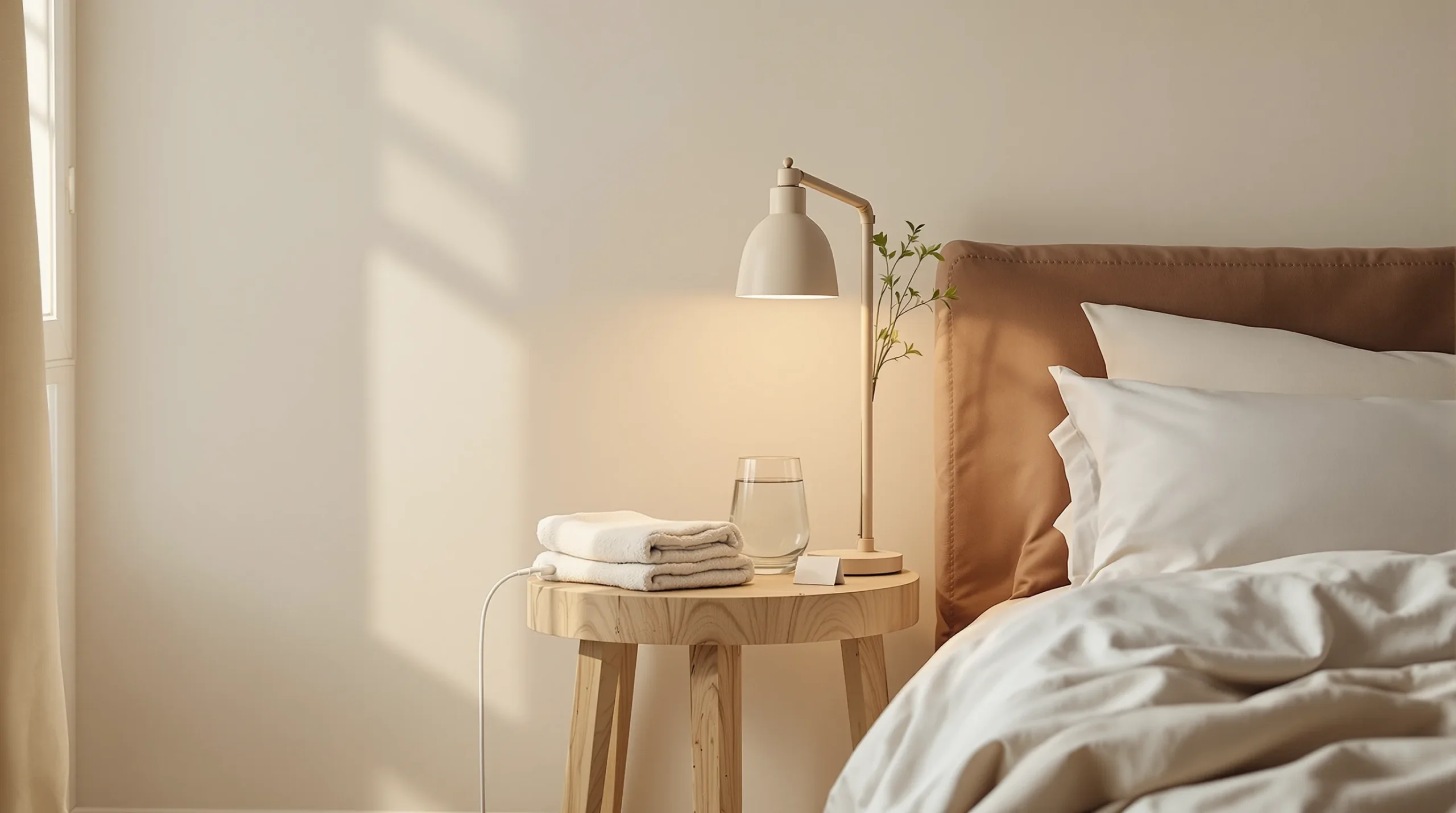
Every guest sleeper — even the air mattress — gets three things within arm's reach: a surface for glasses and a phone, a light they can turn off from bed, and charging by the pillow, with a spare USB-C and Lightning cable waiting. That last one is straight from the guest-essentials playbook (Homes & Gardens) and costs less than a coffee.
16. A luggage landing spot
An open suitcase claims real estate fast. Give it a home that isn't the bed or the walkway: a folding luggage rack (flat-packs behind the door), a bench at the bed's foot, or simply two square feet of floor you deliberately keep clear. It's the smallest idea on this list and the one guests notice most.
17. Blackout and quiet
Guest sleep breaks on light and noise you've stopped noticing. A portable blackout blind (suction cups, renter-safe) or a heavy curtain handles the streetlight; a small sound machine or fan steadies thin-wall noise. Borrowed-light nooks and living-room setups need both twice as much.
18. The welcome kit
Hotel manners, five minutes: towels stacked where they can be seen, a carafe or bottle of water at the bedside, and the Wi-Fi password written on a card instead of recited. None of it takes space; all of it says we expected you.
No spare room at all? Host anyway (19–21)
Remember the baseline: most apartment renters have no spare bedroom. Hosting well without one is a system, not an apology.
19. Host in the living room properly
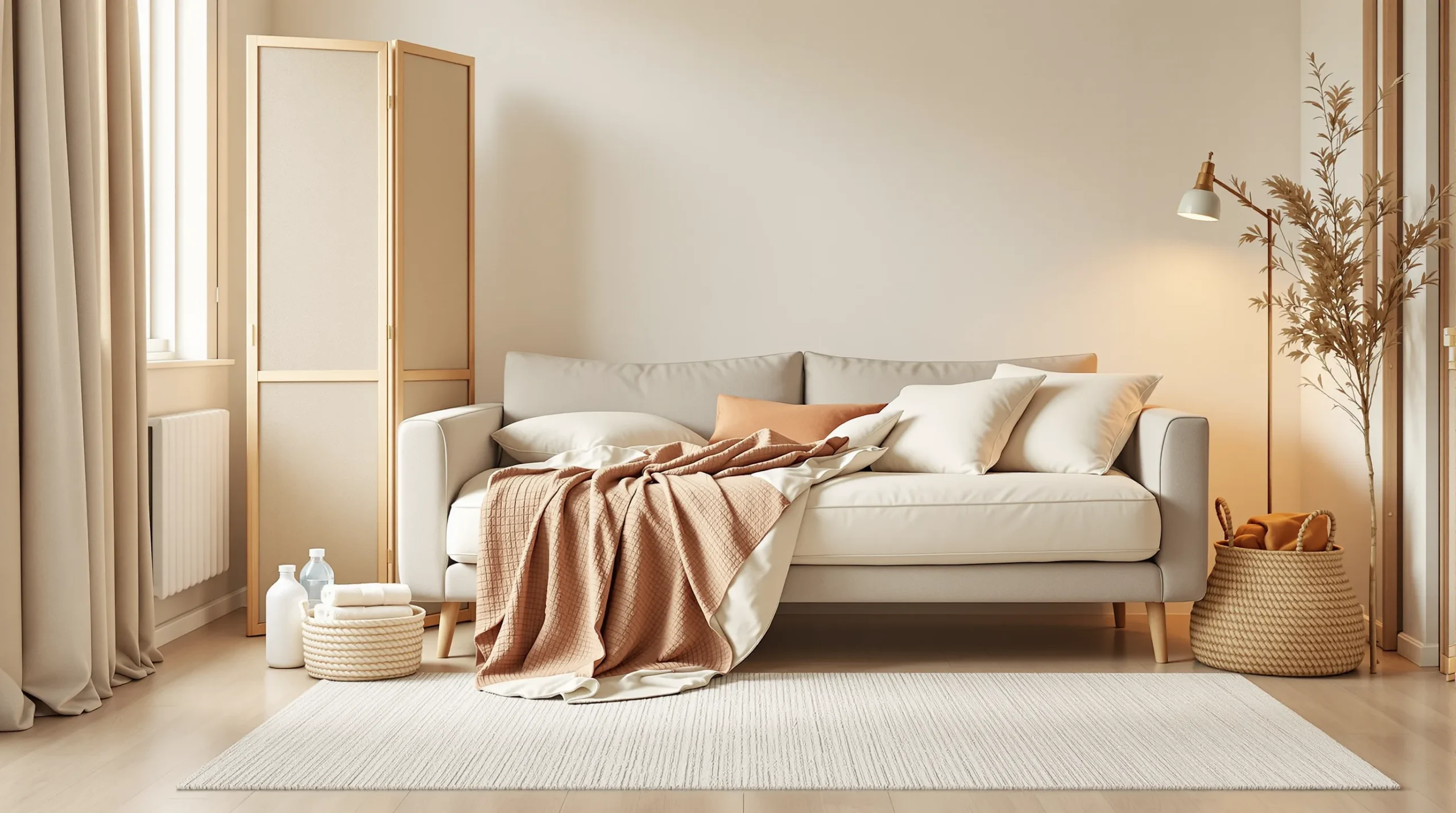
40% of hosts default to the living-room couch (Amerisleep) — and the fix isn't apologizing harder. It's the sofa bed from idea 6, plus a folding screen or curtain for morning privacy, plus a "guest corner" basket (towels, cables, water) that appears at night. A couch with a system is a guest room; a couch with a spare blanket is a couch.
20. Zone a studio for guests
In a studio, the guest zone is wherever you can curtain: across the sleeping corner, along a bookcase line, over the nook. Inflate the double-height mattress there, run the bedside minimum (idea 15), and give guests the zoned corner rather than the middle of the room. It's the same one-room zoning logic as our studio apartment layout guide, pointed at hosting.
21. Build the bedding cache
Guest bedding with no home is why guest setups decay. Give it ONE dedicated spot: the daybed's drawers (44 pounds each in the HEMNES class), a vacuum-bag bin under your own bed, or a single labeled closet shelf — duvet, linens, spare pillow, towels, cables, all together. The cache is what makes the fifteen-minute reset possible.
The 15-minute guest-ready system (22–23)
The difference between hosts who dread visits and hosts who don't is a repeatable reset.
22. Run the 15-minute reset
The checklist, in order: convert the sleeper → cached bedding on → bedside surface, light, and cables in place → luggage spot cleared → towels out → carafe filled. The first time I actually timed my own turnaround it took closer to forty minutes — because the spare duvet was in a bin behind three other bins, and the good pillows were on my own bed. Moving everything guest into one drawer cut it to under fifteen. Run it once for practice and time it; if it's over fifteen minutes, the bedding cache is in the wrong place or the conversion (idea 12) is too fussy.
23. Sleep the hotel test night
Once a year, be your own guest: full night, guest pillow, guest outlet, guest curtain. You'll find the draft, the sag, and the dead bulb before your mother-in-law does — and a 27%-of-guests problem (idea 3) becomes a Tuesday-night fix.
Small guest room mistakes to avoid
- Buying a $3,000 murphy bed for four nights a year — run the frequency math first; rare hosting wants a quality air mattress and a cache, not a construction project anchored into your studs.
- Letting the guest room quietly become the storage room — it happens to 18% of spare rooms (YouGov). Give it a daily job instead.
- The bare-couch default — 40% of hosts do it; a sofa bed, a screen, and a guest basket turn the same room into an actual guest space.
- Bedding with no home — if the duvet lives "somewhere," the reset takes an hour and quietly stops happening.
- Skipping the hotel test — one night in your own setup catches what a guest would never tell you.
Frequently asked questions
What's the best bed for a small guest room?
Match it to your hosting frequency: five or fewer guest-nights a year, a double-height air mattress (about 19 inches tall with a built-in pump) or a floor futon; six to fifteen nights, a daybed or trundle with a real mattress; fifteen-plus, a proper sofa bed — or a murphy bed if you own your home and host constantly.
How do I combine a home office and guest room?
Design the office first, since it's the daily job, then add a sleeper that fits around it — ideally a daybed that doubles as the office sofa with zero conversion. Plan the guest-week changeover in advance (chair to the closet, desk into a tray) so the whole flip takes fifteen minutes.
Are murphy beds worth it in a small space?
For homeowners who host often and have a dedicated flex room, yes — a full-depth mattress that disappears is unmatched. But at $2,000–$4,000 typically installed and anchored into wall studs, it's an owner's project; renters get most of the benefit from a freestanding cabinet bed or a daybed instead.
How can I host guests without a guest room?
Systematize the living room or studio: a real sofa bed or double-height air mattress, a curtain or folding screen for privacy, a bedside minimum (surface, light, charging), and a bedding cache so setup takes fifteen minutes. A couch with a system is a guest room.
What should every guest room have?
Fresh layered bedding with a visible spare blanket, a bedside surface with a light and charging within reach (spare cables included), a luggage landing spot, blackout and some sound cover, and a small welcome kit — towels, water, and the Wi-Fi password written down.
How big does a guest bedroom need to be?
Big enough for the sleeper's OPEN footprint plus walking space — that's the number people forget. A daybed's pull-out double ends up wider than a king, and a pull-out queen needs its mattress's full 80-inch length projecting into the room plus a path in front; check those open dimensions against the clearance tables in our couples bedroom guide before you buy.
Ready in fifteen minutes, welcome all year
The best small guest bedroom ideas start with honesty: count your real guest-nights, and let that number pick the sleeper — air mattress, daybed, sofa bed, or murphy. Give the room a daily job it does well, keep everything guest-shaped in one cache, and sleep the hotel test once. That's a small space that hosts generously without sacrificing a single ordinary Tuesday. For the storage, layout, and make-it-bigger groundwork underneath it, head to our full small bedroom ideas guide.
Run the frequency math tonight — it takes one honest minute. Then grab the free small-space checklist for the printable 15-minute reset card, and save these ideas from our Small Bedroom Inspiration board. Furnishing the room around the guests? See space-saving furniture and small home office ideas.
Written by Nourddine, founder of Calm Square Feet, where he shares warm-minimalist, renter-friendly ideas for small apartments and studios. [More about me → /about].
Sources
- Amerisleep, The Guest Bed Report (survey of 1,011 US adults, May 2026), retrieved 2026-07-11, https://amerisleep.com/blog/guest-bed-report/
- YouGov, Half of Americans have a spare bedroom — how are they using them? (poll of 1,145 US adults, Jan 2025), retrieved 2026-07-11, https://today.yougov.com/society/articles/51529-half-of-americans-have-spare-bedroom-how-are-they-using-them-poll
- IKEA, HEMNES daybed frame with 3 drawers (dimensions, pull-out double, drawer capacity), retrieved 2026-07-11, https://www.ikea.com/us/en/p/hemnes-daybed-frame-with-3-drawers-white-30349329/
- IKEA, FRIHETEN sleeper sofa (dimensions, sleeping surface), retrieved 2026-07-11, https://www.ikea.com/us/en/p/friheten-sleeper-sofa-skiftebo-dark-gray-90341151/
- Fixr, How Much Does It Cost to Install a Murphy Bed? (updated Jan 2025), retrieved 2026-07-11, https://www.fixr.com/costs/murphy-bed-installation
- SoundAsleep, Dream Series Queen Air Mattress (height, capacity, pump specs), retrieved 2026-07-11, https://soundasleepproducts.com/products/dreamseries-queen
- Sleep Foundation, Mattress Sizes and Dimensions (updated Jul 2025), retrieved 2026-07-11, https://www.sleepfoundation.org/mattress-information/mattress-sizes
- Homes & Gardens, Guest bedroom essentials for a comfortable night's sleep, retrieved 2026-07-11, https://www.homesandgardens.com/solved/guest-bedroom-essentials-for-a-comfortable-nights-sleep