
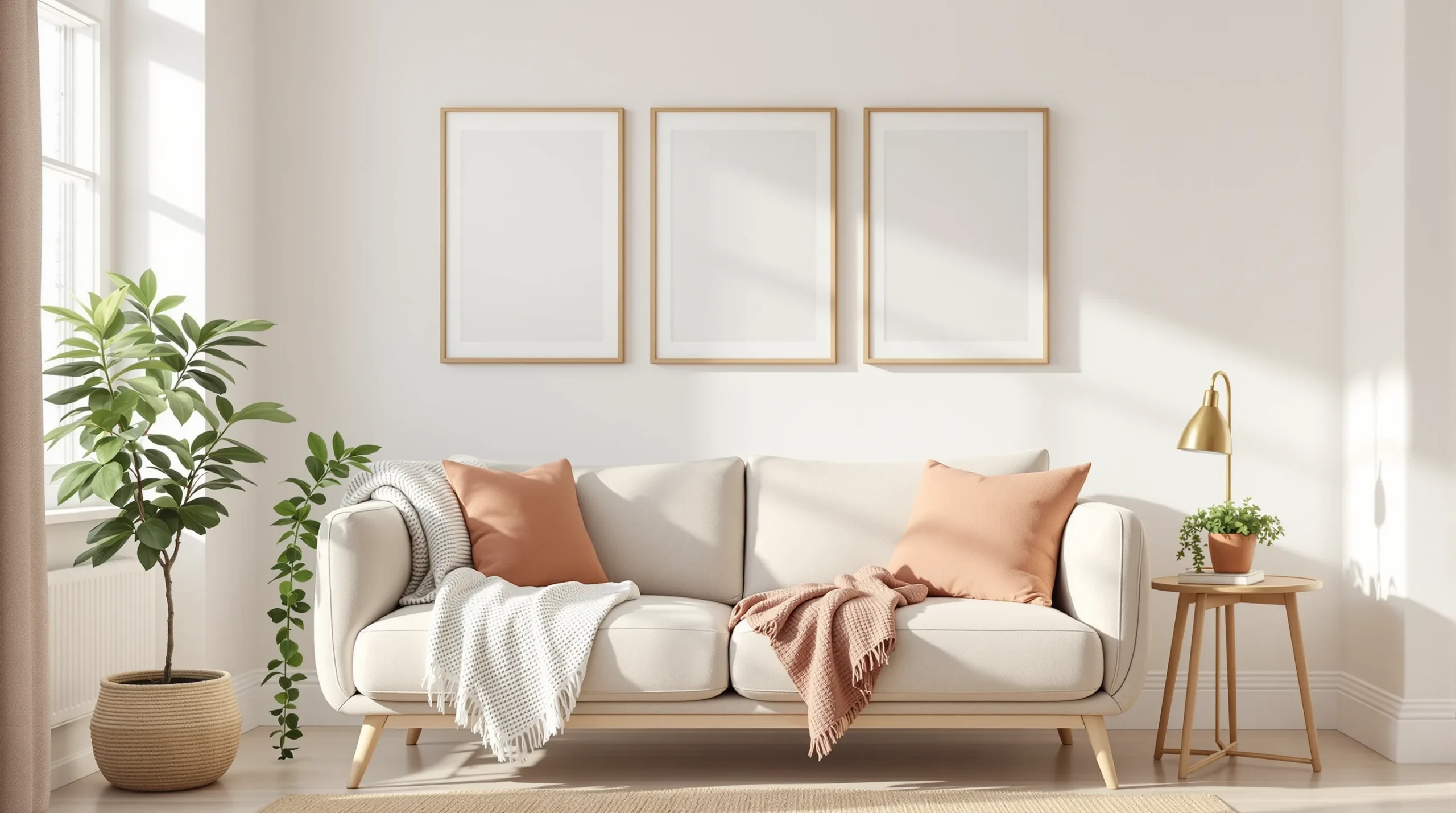
College Apartment Decor: 24 Ideas That Protect Your Deposit
Here's the thing nobody tells you when you move off campus: your dorm was forgiving, but this is a lease. There's a real security deposit attached to these walls, and it's yours to lose. Off-campus housing with a roommate averages roughly $10,800 per person over a year (NCES via EducationData) — so surrendering a month's rent to a wall of nail holes at move-out is a genuinely expensive mistake. The good news: you can have a warm, put-together, actually-cute apartment and get your money back. This guide covers college apartment decor the way a real lease demands it — 24 ideas that fit a student budget of about $500 to $800, work when you're sharing with a roommate, and peel cleanly back off the day you leave.
We'll move fast through four systems the pretty photo roundups skip: protecting your deposit, splitting one budget across five rooms, sorting out roommate money, and — the part everyone forgets — undoing it all at the end.
College apartment decor in 60 seconds
If you only remember four moves: protect the deposit first (document your move-in condition and decorate damage-free), set one budget and split it across your five rooms so you don't end up with one great living room and four bare ones, agree who buys what with your roommates before anyone swipes a card, and keep everything reversible. That's the whole framework. Everything below is detail hung on those four hooks — starting, deliberately, with the money, because a deposit is worth more than any throw pillow.
Key takeaways
- Protect the deposit first. Renters who document their move-in condition — photos, video, a checklist — and decorate damage-free are far likelier to get it back: 80% got at least some of it, 50% got all of it (Zillow, 2024).
- Set one budget and split it: about $500–800 of decor across roughly Bedroom 30% / Living 30% / Kitchen 15% / Study 15% / Bath 10% keeps the whole place cohesive.
- Sort roommate money up front: decide who buys and keeps shared items, split big pieces by cost, and pick a neutral common-area palette so nobody's taste loses.
- Make everything reversible: Command to weight, peel-and-stick on smooth walls only, and a move-out reversal you can knock out in an afternoon.
Protect your deposit before you decorate a thing
Decorating a rental is really two projects: making it look good, and making sure you can erase the evidence. Do the second one first. Security deposits typically run a full month's rent, sometimes two (Baselane) — which makes this the most expensive decorating decision you'll make all year.
1. Document move-in day like it's evidence
Before a single box is unpacked, walk the whole apartment with your phone: photos and a slow video of every wall, the existing scuffs, the stained grout, the closet door that already doesn't close. Fill out the move-in condition checklist your landlord gives you (or make one), and email it to them so it's timestamped and out of your hands. This isn't paranoia — it's the single highest-ROI thing you'll do all year. In Zillow's 2024 renter survey, 41% of recent movers disputed something with their landlord at move-out, most often about repairs and damage, and the renters who'd documented their condition were the ones who got their deposits back (Zillow).
2. Learn what counts as "normal wear" versus a charge
Small nail holes from hanging a frame are, in most states, considered normal wear and tear — a landlord generally shouldn't bill you for a bit of spackle. Where charges actually come from is bigger stuff: anchor holes, a TV mount torn out of drywall, a paint color you didn't ask permission for, or adhesive that pulled the paint off with it. As a rough sense of stakes, patching and repainting a hole tends to get billed around $5–10 each, and a real drywall patch can run $50–400 (illustrative repair ranges from landlord resources, not a formal study). Knowing the line tells you exactly how careful to be.
3. Go damage-free by default
Make removable your first instinct, not your fallback. Command strips and hooks handle most of your hanging if you respect their ratings — the picture-hanging strips hold about 1, 3, and 4 pounds in small/medium/large, general hooks up to 5 pounds, and the jumbo up to 7.5. Match the rating to the frame's actual weight and you'll never have a 3 a.m. crash. For the full damage-free hanging breakdown — which strips for a heavy mirror, how to prep the wall so they actually stick — lean on our DIY small-bedroom decor guide, which covers the load math in depth. Beyond adhesives, default to freestanding over mounted and tension rods over screws.
4. Keep a "reversal kit" from day one
The afternoon you move in, start a shoebox: a small tub of spackle, a sanding sponge, any leftover Command strips, and — if your landlord lets you paint — a labeled sample of the exact wall color. You will not remember the color in ten months, and matching it later is a nightmare. Future-you, standing in an empty apartment the night before the walkthrough, will be so grateful.
Set one budget and split it across five rooms
5. The whole-apartment allocator
The most common first-apartment mistake is blowing the entire budget on the bedroom (because that's what you Pinterest in July) and then having no money left for the four other rooms you also live in. Fix it with a split. On top of your essential furniture, budget roughly $500 to $800 for decor and divide it: Bedroom 30%, Living 30%, Kitchen 15%, Study 15%, Bath 10%. On a $600 budget that's about $180 / $180 / $90 / $90 / $60. It forces a cohesive whole apartment instead of one styled corner and a lot of bare beige.
[Infographic — whole-apartment budget allocator: a five-slice split showing Bedroom 30% / Living 30% / Kitchen 15% / Study 15% / Bath 10%, with dollar amounts on a $600 budget]
Stretch every slice by sourcing in tiers: thrift stores and Facebook Marketplace first (unbeatable for solid-wood shelves and lamps), then Target and IKEA for the new stuff. Treat all prices here as ballparks to verify when you shop. And when the budget goes toward one hard-working multi-use piece rather than three single-use ones, you win twice — our space-saving furniture guide is the place to see which transforming pieces are actually worth it.
Sharing with roommates: who buys what
Money is where roommate friendships go to die. Head it off before anyone buys anything.
6. Make a shared-versus-personal list
Split the apartment into common-area items and personal items. The sofa, the rug, the coffee table, the shared kitchen gear — those get split by cost. Everything in your own bedroom is yours alone. Crucially, decide before you buy who keeps each shared item when the lease ends. "We'll figure it out later" is how one person ends up hauling a sofa nobody agreed was theirs.
7. Pick a neutral common-area palette
Save the bold personality for your own room. In the shared spaces, agree on a calm, neutral base — warm whites, oatmeal, wood tones, one shared accent color — so two different aesthetics can coexist without a standoff. A shared Pinterest board makes this painless: everyone pins, and the overlap becomes the plan. It's the same warm-minimalist base our small living room ideas hub is built on, which makes it easy to layer in later.
8. Split the big pieces fairly, in writing
For a $150 sofa, either one person buys it and the other Venmos half on the spot, or you each take a different big-ticket item of similar value ("I'll get the sofa, you get the rug and lamp"). Whatever you choose, put it in a text thread. It feels over-formal for about a day, and then it saves the friendship.
The bedroom: your one private room
This is the only space that's fully yours, so it's where personality lives. It's also the room you'll get the most emotional return from — spend your biggest slice here.
9. Layer warm bedding first
Bedding is the cheapest way to transform a room, because it fills the largest visual area. Layer a duvet, a contrast throw, and two textures of pillow and the whole room reads finished. The full warm-layering formula — and the bulb temperature that makes it feel cozy rather than clinical — lives in our cozy bedroom guide.
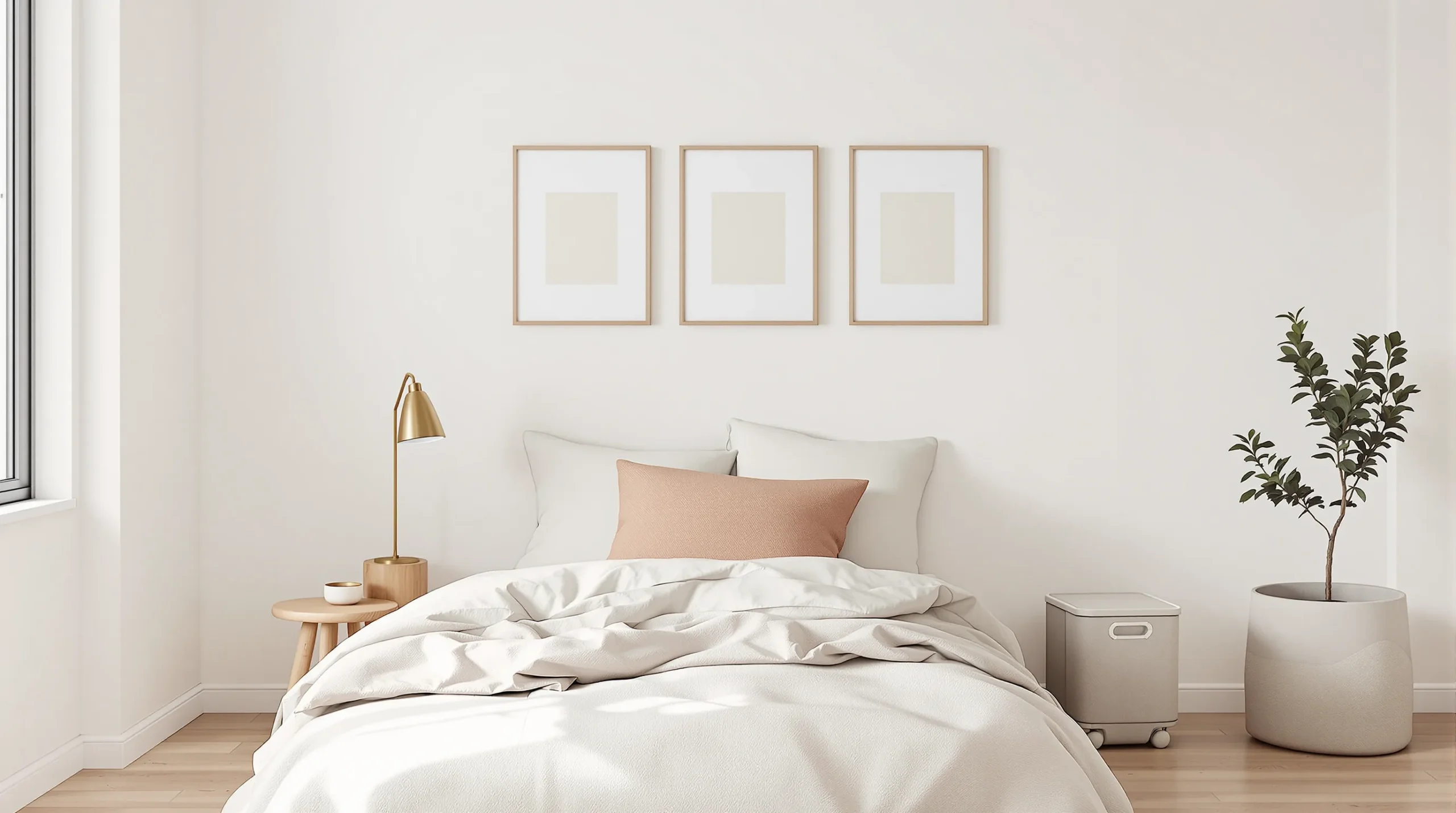
10. Hang a Command gallery trio over the bed
Three framed prints in a row above the headboard is the classic move — just use picture-hanging strips rated for each frame's weight, and skip anything ceiling-grade or heavy directly over where your head goes. Lightweight prints in simple frames are the safe, renter-friendly version of a gallery wall.
11. Reclaim the floor with under-bed storage
A bed frame with clearance plus a couple of rolling under-bed bins is the highest-value storage in any small bedroom — it hides off-season clothes and clutter without adding a single piece of furniture to the footprint. For the broader make-it-feel-bigger playbook (mirrors, sightlines, vertical space), our small bedroom ideas hub is the groundwork.
12. Add a warm lamp and a clip light
Rental ceiling fixtures are almost universally cold and unflattering. You don't have to touch the wiring — a single 2700K bulb in a thrifted lamp, plus a clip-on light on the headboard for reading, changes the entire mood of the room for under $30.
13. Try a peel-and-stick accent wall — on a smooth wall only
A peel-and-stick wallpaper panel behind the headboard is the single most dramatic renter upgrade. One hard-won warning: it only works on smooth walls. The first time I tried it, I stuck a gorgeous roll onto a lightly textured wall in my first apartment, and when I peeled it off eight months later it took a patch of paint with it — a genuinely stomach-dropping moment with a walkthrough two days away. If your walls are orange-peel, knockdown, or popcorn textured, the adhesive won't bond cleanly and will find the paint. Clean the wall, make sure it's fully dry, test one strip in a closet corner first, and remove slowly from a top corner at a low angle — the technique renter wallpaper guides stress for protecting paint.
The living room: the shared heart
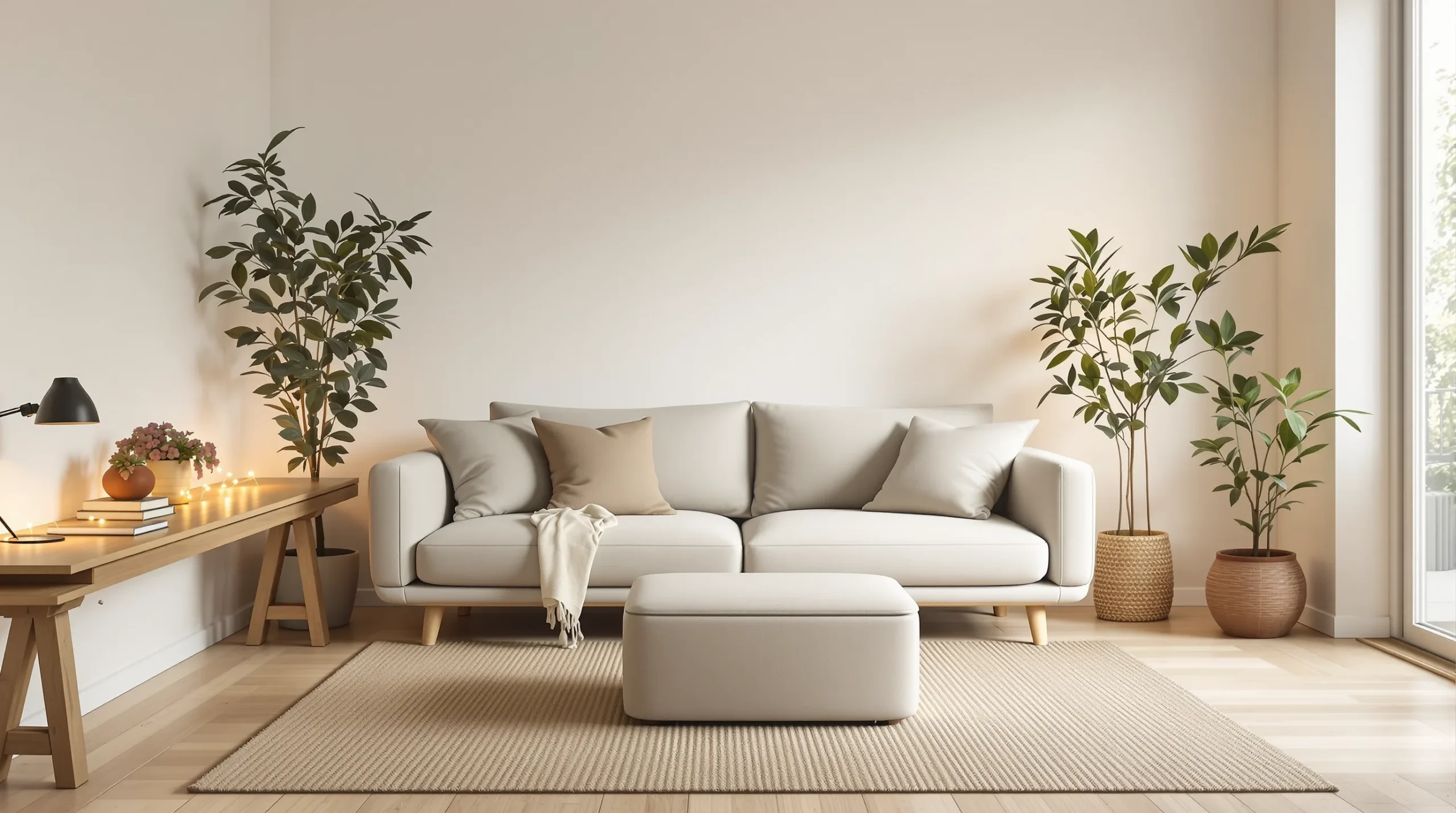
14. Anchor it with a storage ottoman
If you buy one shared piece, make it a storage ottoman: it's a coffee table, extra seating for a fourth person, and a hidden bin for blankets and controllers all at once. That triple duty is exactly the kind of multi-use win covered in our space-saving furniture hub.
15. Use a rug to zone the space
A rug is a renter's most powerful no-damage tool — it defines the living area, warms up cheap flooring, and covers a stained carpet you're not allowed to replace, all with zero holes. In a shared or open apartment, it's how you signal "this is the living room" without a single wall.
16. Float the layout off the walls
The instinct in a small room is to shove everything against the perimeter, which usually makes it feel more cramped and awkward. Pulling the sofa even a few inches off the wall and angling seating toward conversation reads more intentional. Our small living room layout guide walks through the actual arrangements for tight apartment footprints.
17. Layer the lighting
One overhead light makes a room feel like a waiting room. Add a floor lamp in a corner and a string of warm lights along a shelf or window, and you've got depth and warmth — no hardwiring, no landlord permission, no holes.
The kitchen and bath: small, rented, and fixable
The rooms you can't renovate are exactly where removable decor earns its keep.
18. Install a peel-and-stick backsplash
A peel-and-stick tile backsplash instantly upgrades a dated rental kitchen, and it comes off at move-out — again, on smooth surfaces only, removed at a low angle. For the rest of the tiny-kitchen playbook (counter space, storage, making it feel bigger), see our tiny kitchen ideas.
19. Go vertical and magnetic for kitchen storage
College kitchens are microscopic on storage. Claw it back off the walls and surfaces you're not using: a magnetic spice rack on the fridge side, a tension rod under the sink to hang spray bottles, an over-the-cabinet-door caddy, and a drop-leaf or foldable table that collapses when you're not eating.
20. Add an over-toilet shelf and a tension caddy
The bathroom's only real estate is vertical. An over-the-toilet shelf and a tension-rod shower caddy add a surprising amount of storage without a drill. For the full small-bath treatment — color, mirrors, the whole warm-but-tiny look — our small bathroom decor guide has it.
21. Cover an ugly floor with peel-and-stick tile
If your rental bathroom floor is genuinely grim, peel-and-stick vinyl floor tiles are a cheap, reversible fix. Test a single tile in a corner first to confirm it lifts cleanly, then do the room — and keep a few spares in your reversal kit.
The study nook: a desk that earns its corner
22. Carve out a corner, even without a spare room
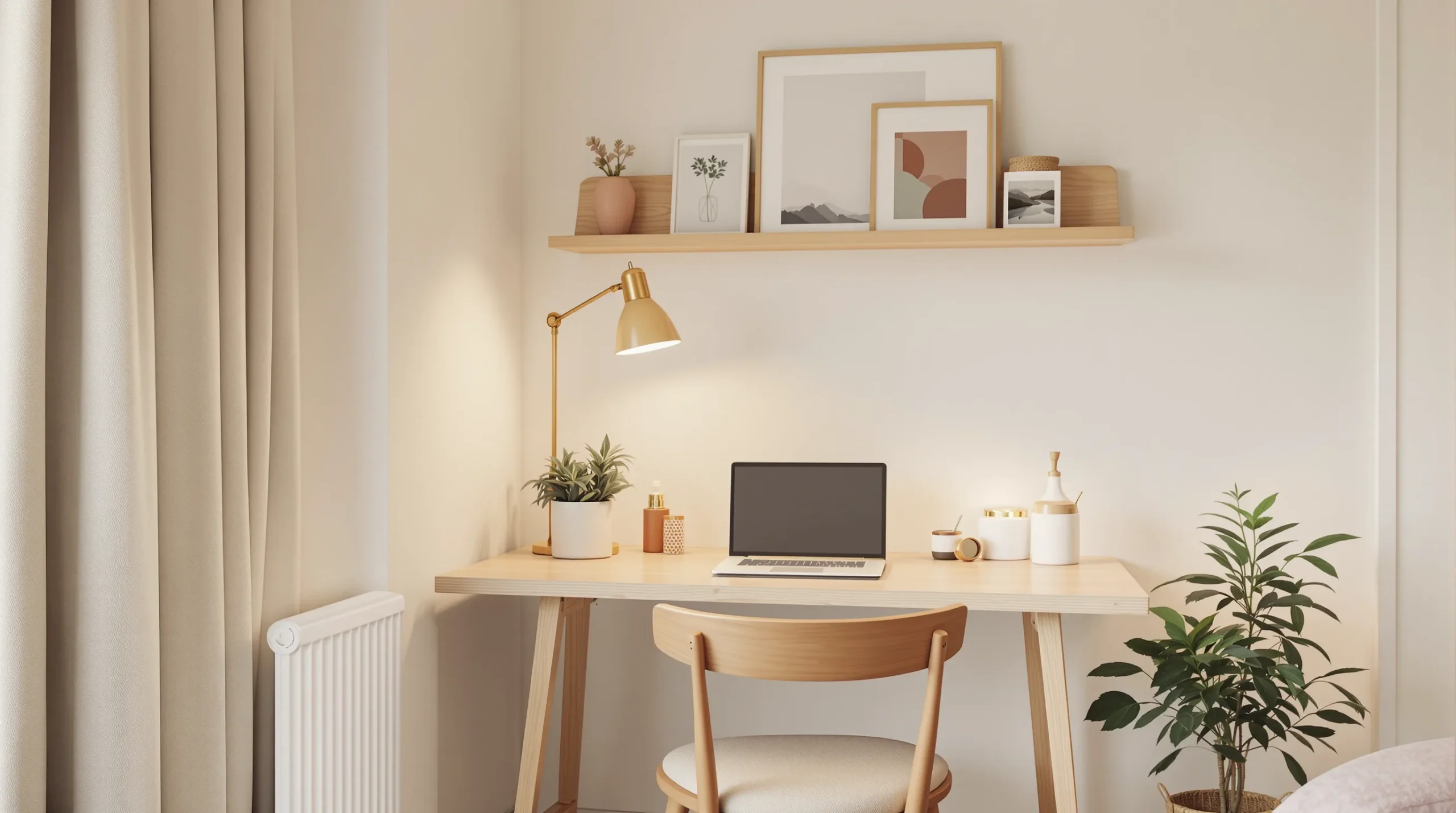
You don't need a home office — you need one honest workspace so you're not doing every assignment in bed. A slim corner desk or a wall-mounted fold-down desk claims a working zone out of almost nothing. Our small home office ideas guide is built for exactly this square-footage.
23. Display vertically instead of drilling a shelf
Above the desk, resist the urge to drill. A leaning picture ledge or a freestanding wire grid gives you pinboard and display space you can pack flat and take with you — no anchors, no patching.
24. Warm-light it so you'll actually use it
Here's the small thing that made the difference for me: my first desk sat unused for a month because the corner was lit like a parking garage. The afternoon I added a warm task lamp and a seat cushion, I suddenly wanted to sit there. A workspace you avoid isn't decor — it's a clothes rack. Make it warm and comfortable enough that you choose it.
How to undo it all at move-out
The reversal is the whole game, and it's easier if you didn't cut corners on the way in. Give yourself an afternoon a few days before the final walkthrough — not the morning of.
Work through it in order: peel every adhesive — strips, wallpaper, tile — slowly, starting at a top corner and pulling down at a low angle (heat a stubborn edge with a hairdryer). Spackle and lightly sand every nail hole, then touch up with your saved paint sample. Wipe down the walls. Then re-document everything with photos and compare them, room by room, against the move-in set you emailed yourself in idea 1. If the two sets match, your deposit conversation is already won.
[Infographic — deposit protection & move-out reversal checklist: document in → decorate damage-free → reverse out, as a simple two-column before/after]
Mistakes that cost college renters their deposit
Most lost deposits trace back to a short list of avoidable moves:
- Sticking peel-and-stick wallpaper or tile on textured or rough walls, where it bonds to the paint instead of sitting on top of it.
- Painting a wall without written permission — a verbal "sure, probably fine" is not a defense at move-out.
- Drilling into drywall for a TV mount. That's a repair, not a decoration.
- Hanging anything heavy over a bed with ceiling-grade adhesive.
- Skipping move-in documentation, then having no proof the scuff was already there.
- Buying a shared sofa with no agreement about who keeps it. Furniture custody disputes are real.
- Leaving the reversal to the final hour. Rushed patching looks rushed, and looks-rushed reads as damage.
Frequently asked questions
How do you decorate a college apartment on a budget?
Set a total decor budget of about $500–800 and split it across your rooms so nothing gets neglected. Source in tiers — thrift and Facebook Marketplace first, then Target and IKEA — and spend on a few hard-working multi-use pieces (a storage ottoman, an under-bed system) rather than lots of single-purpose decor.
How can I decorate without losing my security deposit?
Document the apartment's condition the day you move in, keep everything damage-free (Command strips to weight, tension rods, peel-and-stick on smooth walls only), and reverse it all before the walkthrough. Documenting renters are the ones who get deposits back — 80% got at least some of it back, half got it all (Zillow).
How do roommates decorate a shared apartment without clashing?
Separate common-area items (split by cost, and agree who keeps them at lease-end) from personal bedroom items (each person's own). Choose a neutral shared palette for the common spaces via a shared Pinterest board, and save bold personal style for your own room.
How do I hang things without nails or drilling?
Command picture strips (about 1–4 lb depending on size) and hooks (up to 5 lb, or 7.5 for jumbo) handle most framed art; tension rods handle curtains and closet dividers; leaning ledges and freestanding grids handle display. Match every adhesive to the item's real weight — see our DIY guide for the full breakdown.
Is peel-and-stick wallpaper safe for rental walls?
On smooth, clean, fully dry walls, yes — it's designed to remove cleanly. On textured walls (orange-peel, knockdown, popcorn) it can bond to and pull off the paint. Always test one strip in a hidden corner first, and remove slowly from a top corner at a low angle.
Can my landlord charge me for nail holes?
Small nail holes are usually treated as normal wear and tear, which a landlord generally can't deduct for. Bigger damage — anchor holes, torn drywall from a TV mount, unapproved paint — is fair game. The safe move is to spackle and touch up small holes yourself before the walkthrough.
Bringing it all together
Good college apartment decor isn't about copying a photo — it's about building a whole apartment you love that also lets you walk away clean. Protect the deposit first, split one budget so every room gets its due, sort the roommate money before it sorts you, and keep every choice reversible. Do that, and you get both things: a warm, personal first apartment now, and your full deposit back later — which, on a student budget, might be the best decor investment of all.
Ready to go room by room? Start with the small bedroom ideas and small living room ideas hubs, and if you're in a single room, our studio apartment layout guide. Curious who's behind Calm Square Feet? Say hi on our about page. Want the printable version of the deposit-protection and budget-split checklists? grab the free first-apartment starter kit, and save these ideas from our First Apartment Essentials board.
Sources
- Zillow — Consumer Housing Trends Report 2024 (Renters), move-out disputes and deposit-return by documentation: https://www.zillow.com/research/renters-housing-trends-report-2024-34387/
- EducationData.org, citing U.S. Dept. of Education / NCES — average cost of room & board and off-campus rent (AY2025-26): https://educationdata.org/average-cost-of-room-board-at-college
- Security deposit norms (≈ one month's rent): https://www.baselane.com/resources/how-much-is-security-deposit
- Nail-hole and wall-repair cost ranges (illustrative): https://yourlandlordresource.com/how-much-can-a-landlord-charge-for-nail-holes-secrets-unveiled/
- Renter-friendly peel-and-stick technique and surface guidance: https://www.wallshoppe.com/blogs/news/the-best-renter-friendly-wallpaper-peel-stick-damage-free
- 3M Command adhesive weight ratings (as compiled in our DIY guide): /bedroom-ideas-for-small-rooms-diy/