Cozy Bedroom Ideas for Small Rooms: 21 Renter-Safe Tricks
Most “cozy bedroom” advice tells you to buy more: more throws, more pillows, more lamps. In a small room that’s exactly wrong — pile on stuff and a tight space just feels cramped. Real coziness is quieter than that. It comes from two things you can control without spending much or drilling anything: warm light and layered texture, plus one gesture that makes the bed feel enclosed. Get those right and a small bedroom stops feeling like a leftover box and starts feeling like a cocoon. Here are 21 cozy bedroom ideas for small rooms — the exact bulb color to buy, the way to layer a bed, and a no-drill bed nook — all renter-safe. This is the cozy companion to our small bedroom ideas guide, which handles storage, layout, and rug sizing; this one is all about warmth.
Key Takeaways
- Cozy in a small room is a texture-and-light problem, not a more-stuff problem — warmth without clutter.
- Switch to 2700K “soft white” bulbs and skip anything labeled 4000K or higher; warm, dim light even helps you wind down (Harvard Health; Sleep Foundation).
- Layer the bed — sheet, coverlet, duvet, throw — and vary the texture, not the color (three or four tones, mostly neutral).
- Build a no-drill bed nook — a leaning headboard and a sheer half-canopy on wall-rated adhesive hooks — so a small room feels enveloping instead of tight.
What makes these bedroom ideas for small rooms cozy?
Three things, in this order: warm, low light; layered texture you can feel; and one enclosing gesture, like a canopy or a headboard, that gives the bed a sense of shelter. Notice what’s not on that list — more furniture, more decor, more square footage. In a small room the rule is restraint. Coziness is about how the space feels, not how much is in it, and the tricks below are ordered from the highest-impact (light) to the finishing touches.
Start with the light — warm and dim (1–5)
If you change one thing, change the light. It’s the fastest, cheapest cozy upgrade, and in a rental it’s completely reversible.
1. Switch to 2700K “soft white” bulbs
Bulb color is measured in kelvins, and the number on the box decides whether your room feels like a candlelit den or a parking garage. For a bedroom you want 2700K, labeled “soft white” — the warm, golden end of the scale. Manufacturers say it plainly: 2700K is the best color temperature for a bedroom because it promotes relaxation (Feit Electric). Anything labeled 4000K “cool white” or 5000K “daylight” pushes a room cold and clinical. Swap one 4000K bulb for a 2700K and the whole room changes that evening.
2. Never light a bedroom from the ceiling alone
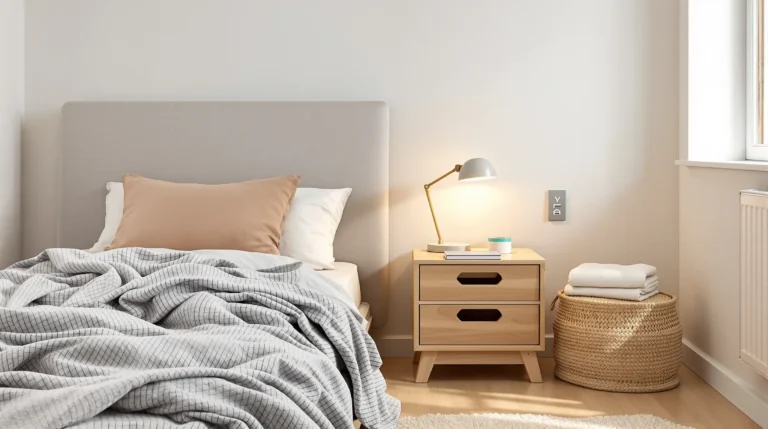
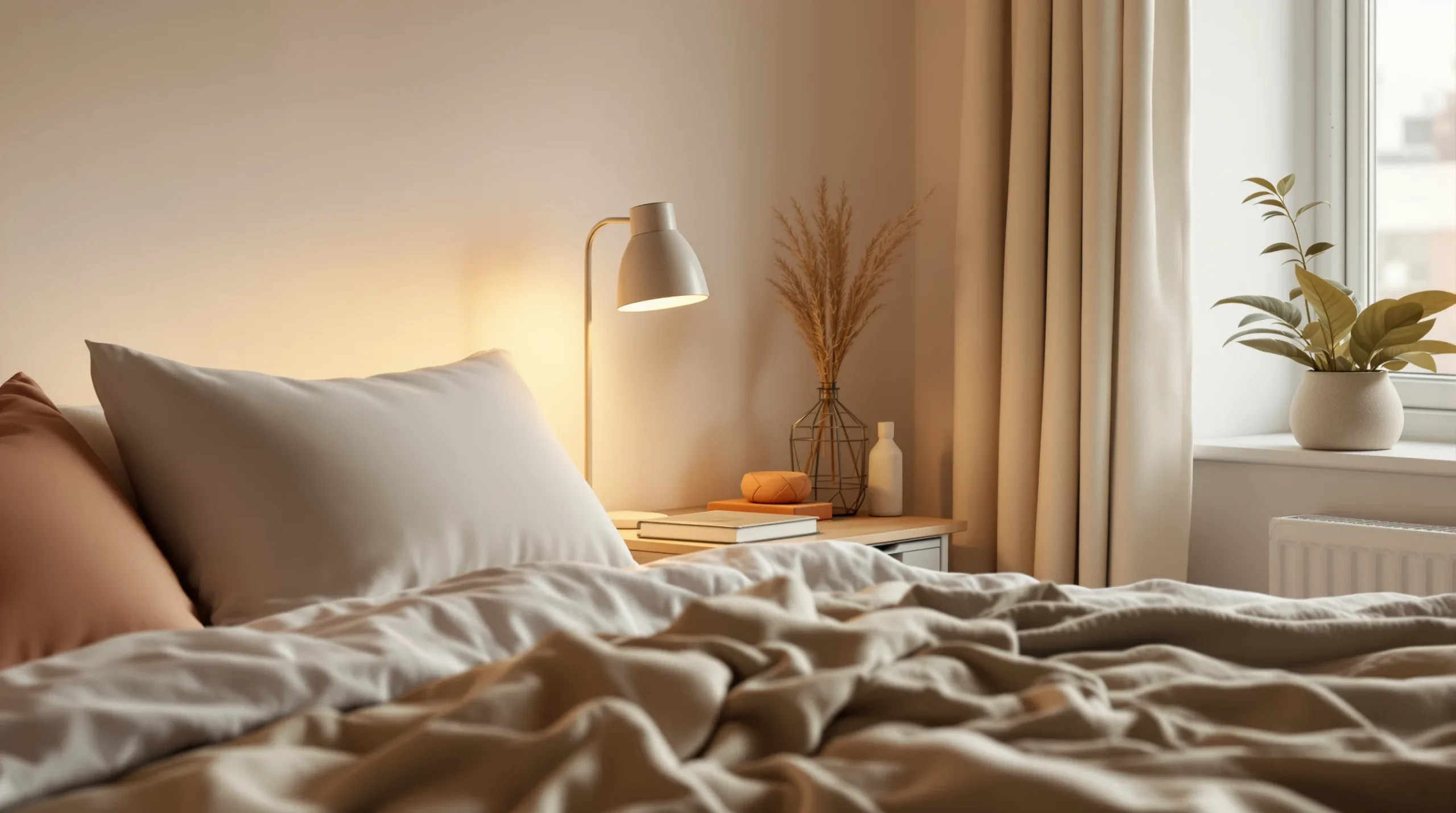
A single overhead fixture flattens everything and casts hard shadows — the opposite of cozy. Layer your light instead: a bedside lamp, one accent source (a small sconce or a shelf light), and soft ambient fill. Several low, warm pools of light read intimate; one bright ceiling light reads institutional. If the overhead is all you’ve got, leave it off most evenings and let the lamps carry the room.
3. Add light without drilling
You don’t need an electrician or a single screw. Plug-in wall sconces, clip-on reading lights, a string of warm fairy lights along the headboard, a rechargeable table lamp, or a Himalayan salt lamp (which glows warm by nature) all add layers and all come back off at move-out.
4. Dim it — your body notices
Warm and dim beats warm and bright. Harvard researchers found that just 8 lux — a level most table lamps exceed — is enough to affect melatonin, and that blue-heavy light shifts your body clock about three hours versus one and a half for warmer light (Harvard Health). Sleep specialists give the practical version: keep evening light dim and warm, favor amber and red tones over blue, and put screens away two to three hours before bed (Sleep Foundation). A smart bulb or a $10 plug-in dimmer lets one lamp go from “getting dressed” to “winding down.”
A cozy bedroom and a sleep-friendly one turn out to be the same room: low, warm, and dim.
5. Let the light pool low
Height matters as much as color. Lamps at or below eye level — bedside tables, a floor lamp turned low, fairy lights near the baseboard — wash the room from underneath and feel like candlelight. Keep the glow low and warm and skip real flames near bedding; a flameless LED candle gives the same flicker with none of the risk.
Layer the bed for warmth (6–10)
The bed is the single biggest thing in a small bedroom’s sightline, so it’s where cozy is won or lost. Layering is the whole game.
6. Build the layer stack
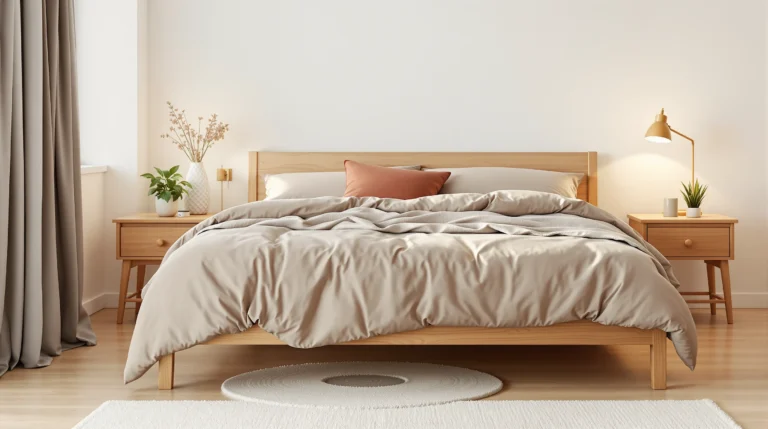
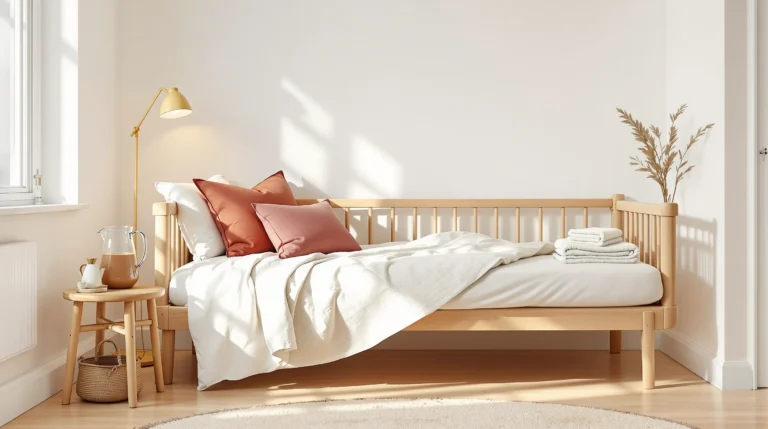
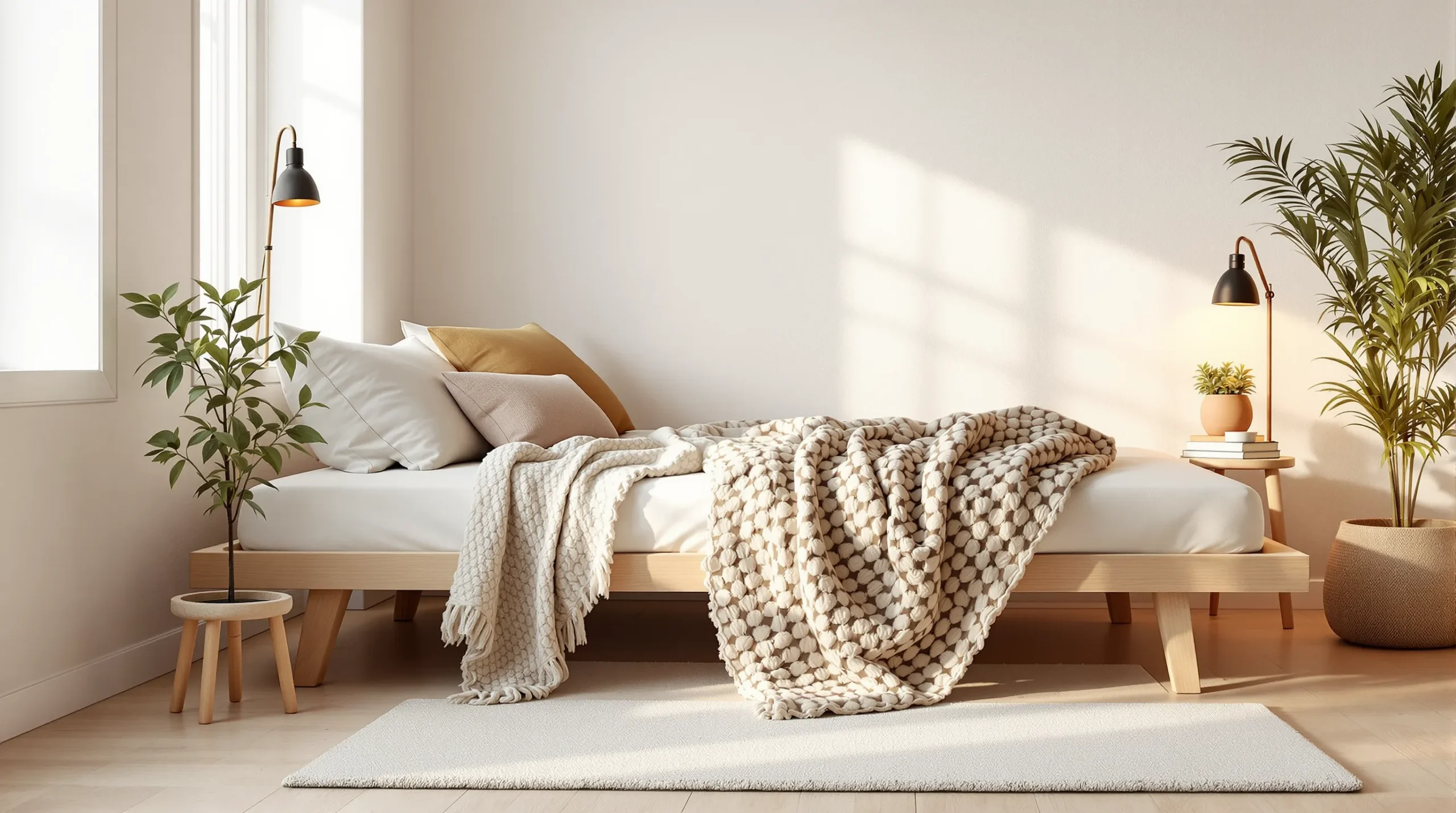
Cozy beds aren’t one thick duvet — they’re layers you can see and feel. The full stack, bottom to top: fitted sheet, a light top sheet, a quilt or coverlet, the duvet folded back, then pillows and a throw. The minimum that still reads cozy is just three: sheet, duvet, and a throw across the foot. The layers do the work a single thick duvet can’t — each one catches the light a little differently and gives the eye something soft to land on, so the bed reads plush instead of flat.
7. Vary the texture, not the color
This is the warm-minimalist secret that keeps a small room calm: change the feel at every layer, not the color. Crisp linen against brushed cotton against a chunky wool or bouclé throw gives a bed depth even in three quiet tones. Match the palette, contrast the textures, and cap it at three or four colors, mostly neutral.

8. Add a throw and a few pillows — then stop
A folded throw at the foot and two or three pillows in mixed textures is the single fastest cozy upgrade there is. The catch, in a small room, is knowing when to stop: three to five pillows total, not the dozen you see in showrooms. Over-piling a small bed just makes it look lumpy and leaves you nowhere to sleep.
9. Layer a rug for warmth underfoot — and quiet
A soft rug beside the bed does two cozy jobs: warm feet in the morning, and it quietly absorbs sound, which makes a hard-floored rental feel softer and calmer. In a narrow room, two runners flanking the bed work where one big rug won’t fit. (For the right rug size under a bed, our small bedroom ideas guide has the measurements — here it’s purely about the warmth and hush.)
10. Hang soft, floor-length drapes
Curtains do more than block light — full, floor-length drapes soften the hard lines of a room and hush it acoustically, both deeply cozy effects. Hang them high and wide on a tension rod or a Command-mounted rod so there’s not a hole in sight.
Warm up the color without paint (11–13)
You don’t need a paintbrush — or your landlord’s permission — to warm up a room’s color.
11. Start warm-neutral, add one accent
Build on a base of oat, greige, or mushroom — warm neutrals that feel like a hug — then add a single accent: one clay, terracotta, or rust note in a throw or a cushion. One warm accent across a soft neutral base is what makes a small room feel intentional instead of beige. Picture a greige duvet, oatmeal linen curtains, and a single rust cushion — three warm neutrals and one earthy note, nothing shouting for attention.
12. Borrow the 2026 warm palette — with restraint
Designers are calling for warm, earthy bedrooms right now: clay, terracotta, and mushroom replacing cool greys and pastels, all in service of a cocooning feel (Homes & Gardens). For a small room, take the palette but not the maximalism — pick one of those tones and repeat it two or three times. The same warm-neutral thread runs through our small living room ideas if you want the rooms to flow.
13. Get color without opening a paint can
Color in a rental comes from textiles, art, and a peel-and-stick accent or headboard wall — all reversible. And here’s the quiet one: a 2700K bulb warms the perceived color of everything in the room. Before you repaint in your head, change the bulb and look again.
Build a bed nook — make small feel like a cocoon (14–17)
This is where a small bedroom beats a big one. Enclosure is cozy, and a small room is already halfway there.
14. Lean a headboard instead of drilling
A headboard anchors the bed and says “this is the cozy corner” — no drilling required. Hang a soft fabric panel or a tapestry from a Command-mounted or tension rod, or stand a cushioned lean-to headboard against the wall behind the mattress. Both read intentional and both come down clean.
15. Hang a no-drill half-canopy
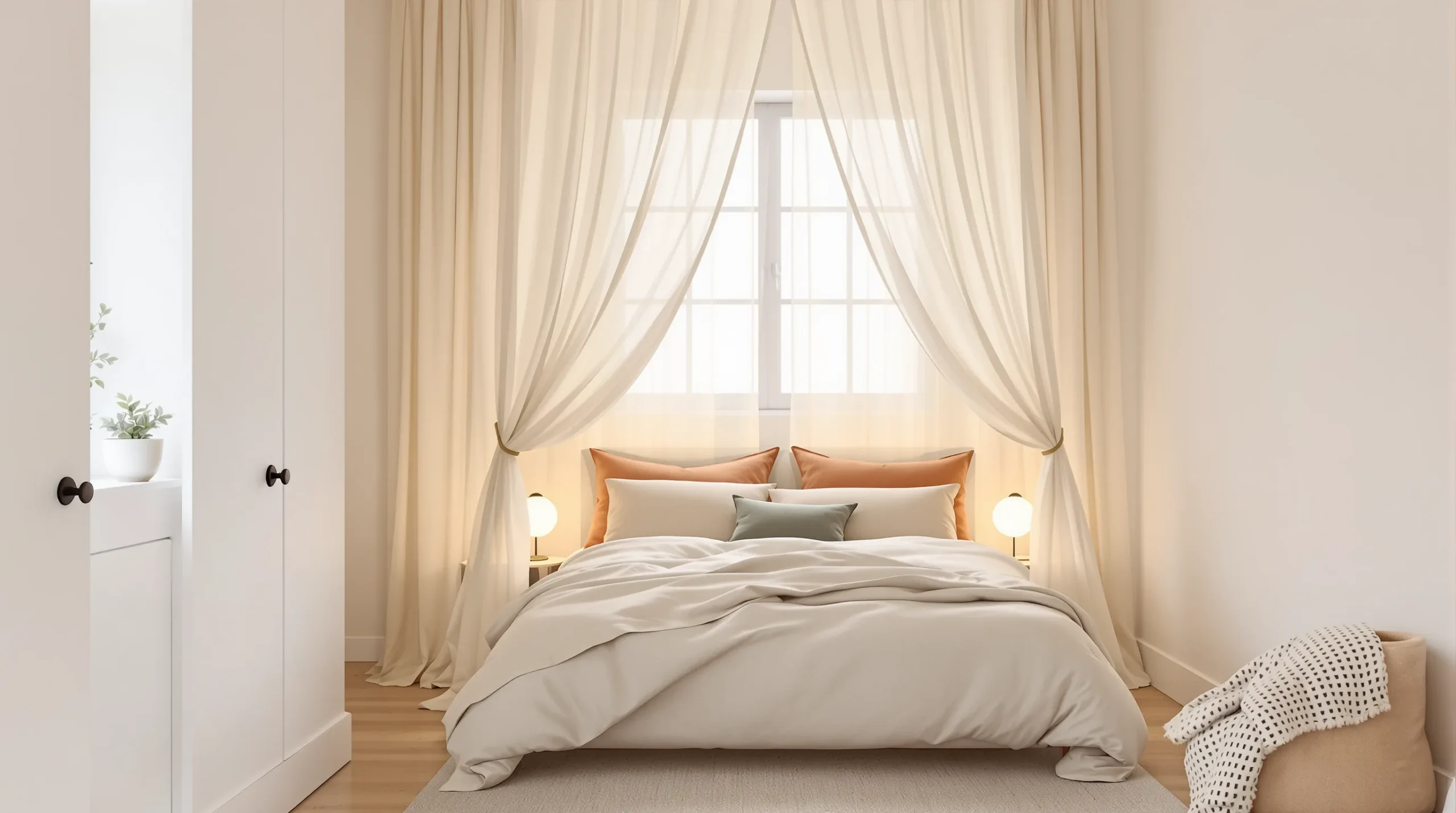
A canopy sounds fussy until you sleep under one. In my own box of a bedroom, I hung two lightweight sheer panels from three adhesive hooks on the wall behind the headboard — a half-canopy, not a full tent — and the bed instantly felt like its own little room. Total cost was under $30, nothing touched a drill, and the hooks peeled off cleanly when I left. Keep the fabric light (sheer voile, not velvet) so the adhesive hooks hold, or use a freestanding canopy frame if you’d rather not touch the ceiling at all.
16. Curtain the bed itself
If the bed sits in an alcove or a corner, a sheer or linen curtain on a tension rod turns it into a room within the room. Draw it at night and the bed becomes a berth — the coziest feeling a small space can offer.
17. Use the smallness on purpose
Here’s the reframe the whole article rests on: a small bedroom’s tightness is an advantage for coziness, not a flaw. Low warm light plus a little enclosure turns “cramped” into “intimate.” Stop fighting the size and lean into it — the same instinct that makes a studio apartment layout work by zoning one room works here by cocooning one bed.
The finishing layer — sensory cozy (18–21)
Cozy isn’t only what you see. The last layer is what you smell, hear, and touch.
18. Add warm scent — flamelessly
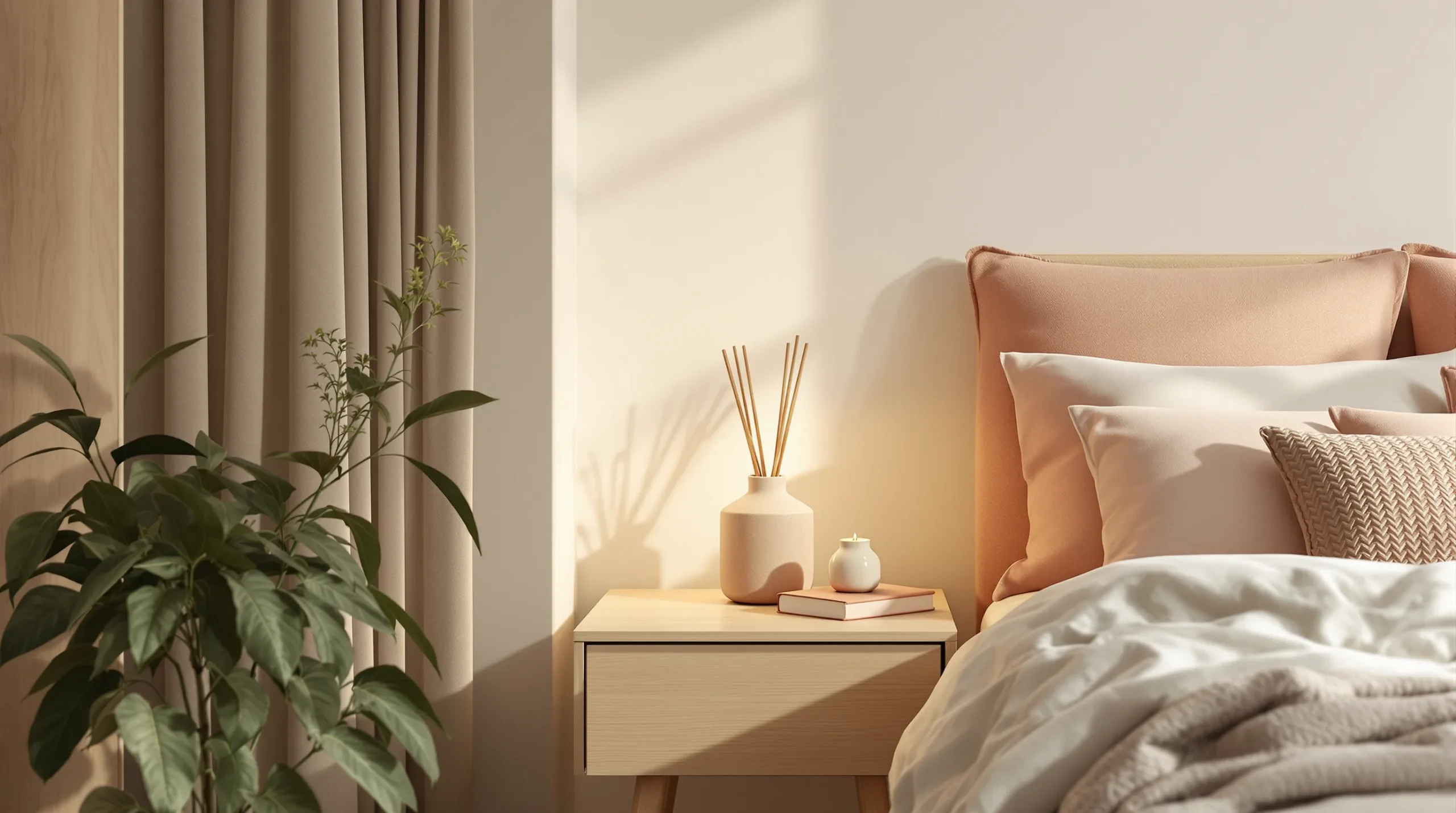
Scent is the fastest shortcut to cozy. A reed diffuser, a flameless (LED) candle, or a linen spray in cedar, sandalwood, lavender, or vanilla makes a room feel warm before you’ve changed a thing. Keep open flames away from all that bedding — a flameless option or a diffuser is the renter-safe pick.
19. Soften the sound
Quiet is cozy. A small speaker with rain or low brown noise smooths over thin apartment walls, and all those textiles you added — rug, drapes, throw, knit pillows — double as sound padding. A soft room is a calm room.
20. Bring in one or two plants
A little greenery adds organic softness that hard furniture can’t. One or two low-maintenance plants — a pothos, a peace lily, a snake plant — is plenty; the restraint is the point, since a jungle just becomes clutter in a small room.
21. Warm the touchpoints
Finally, warm the places your body actually meets the room: a soft rug where your feet land, tactile bedding you want to burrow into, a knit throw within reach. Coziness lives at the touchpoints. The same no-drill, reversible thinking carries into the rest of the apartment too — see small bathroom decor and tiny kitchen ideas.
Cozy without clutter — 5 mistakes to avoid
The line between cozy and cramped is thin in a small room. Most cozy fails are really clutter in disguise.
- Too many throw pillows — edit down to three to five; a wall of pillows you move to the floor every night isn’t cozy, it’s a chore.
- One cool-white bulb undoing everything — a single 4000K bulb in the mix keeps the whole room cold no matter how many throws you own.
- Over-layering a tiny bed — past a point the layers stop reading plush and start reading lumpy; keep it edited.
- Matchy sets instead of texture — a bed-in-a-bag in one flat color has no depth; vary the texture, not the color.
- Buying more decor when the fix is light — before you add another object, change a bulb or dim a lamp. Better light beats more stuff every time.
Frequently asked questions
How do I make my small bedroom cozy?
Start with the light — swap to warm 2700K bulbs and keep it dim and low, never overhead-only. Then layer texture on the bed (sheet, coverlet, duvet, throw), add a soft rug and drapes, and give the bed one enclosing gesture like a leaning headboard or a sheer canopy. Warmth and texture, not more stuff, are what make a small room cozy.
What color light is best for a bedroom?
2700K, labeled “soft white” — the warm, golden end of the scale. Avoid anything 4000K “cool white” or 5000K “daylight,” which read cold. Warm, dim light is also easier on your sleep: bright and blue-heavy light suppresses melatonin far more than warm light does (Harvard Health).
How do you layer a bed to look cozy?
Work bottom to top: fitted sheet, top sheet, a quilt or coverlet, the duvet folded back, then pillows and a throw. The trick is to vary the texture at each layer — linen, cotton, wool, knit — while keeping to three or four mostly neutral tones so it stays calm, not busy.
How can I make a rental bedroom cozy without drilling?
Everything here is reversible: 2700K plug-in lamps and clip lights, a leaning or rod-hung headboard, a sheer half-canopy on wall-rated adhesive hooks, peel-and-stick color, and drapes on a tension rod. No holes, no paint, no lost deposit.
How do I make a small room cozy without making it feel cramped?
Restraint. Add warmth through better light and layered texture, not through more furniture and decor. Keep to a warm-neutral palette with one accent, cap the pillows and plants, and let a single enclosing gesture — a canopy or headboard — do the cozy work.
What’s a cozy color scheme for a small bedroom?
A warm-neutral base — oat, greige, or mushroom — with one earthy accent like clay or terracotta. It’s the direction designers are taking bedrooms in 2026, and for a small room the key is using one warm accent, not all of them.
Warm, soft, and enclosed
A small bedroom becomes cozy the moment you stop shopping and start adjusting: warm the light to 2700K and dim it, layer real texture on the bed, keep the palette warm and quiet, and give the bed one enclosing gesture so the room hugs you back. Everything here is renter-safe and reversible — no drilling, no paint, no deposit at risk. For the storage, layout, and rug sizing that make a small bedroom work, head to our full small bedroom ideas guide.
Pick two or three ideas and try them tonight — start with the bulb. Then grab the free small-space checklist for the cozy-bedroom shopping list, and save the ideas from our Small Bedroom Inspiration board. Warming up the rest of the place? See small living room ideas and small bathroom decor.
Written by Nourddine, founder of Calm Square Feet, where he shares warm-minimalist, renter-friendly ideas for small apartments and studios. [More about me → /about].
Sources
- Harvard Health, Blue light has a dark side, retrieved 2026-07-05, https://www.health.harvard.edu/healthy-aging-and-longevity/blue-light-has-a-dark-side
- Sleep Foundation, Light and Sleep, retrieved 2026-07-05, https://www.sleepfoundation.org/bedroom-environment/light-and-sleep
- Feit Electric, How to Choose the Right Color Light Temperature, retrieved 2026-07-05, https://www.feit.com/blogs/inspire/how-to-choose-the-right-color-light-temperature-for-your-bulb-or-fixture
- Homes & Gardens, Bedroom Color Trends 2026, retrieved 2026-07-05, https://www.homesandgardens.com/interior-design/bedrooms/bedroom-color-trends-2026