
Space Saving Furniture: 24 Pieces That Earn Their Footprint
In a small apartment, floor space is the whole budget — so every piece of furniture has to earn the footprint it takes up. The best space saving furniture earns it one of two ways: it either does two or more jobs at once, or it folds and nests away to almost nothing when you're not using it. There's one catch the glossy roundups never mention, though — the number that decides whether a convertible actually fits isn't its closed size, it's how big it gets when it's open. This guide walks through 24 space-saving pieces organized by the job they do, with the real open-and-closed dimensions, an honest note on which ones a renter can actually use, and which to skip. Warm, minimal, and reversible — no gadgets, no drilling you'll regret.
Key Takeaways
- In a small space, every piece should do 2+ jobs or fold away to nothing — the "does it earn its footprint?" test.
- Plan for the open dimensions, not the closed ones: a sofa bed opens to nearly 6.5 feet of floor, and a queen Murphy bed projects 7-plus feet from the wall.
- Renters, mind the drill: Murphy beds usually need wall anchoring — a freestanding cabinet bed, a sofa bed, or a storage bed does the same job reversibly.
- The best buys either hide storage (a lift-top table, a storage ottoman, a storage bed) or transform — a gateleg goes from a 10-inch console to a 60-inch dining table.
The one test every small-space piece has to pass (1–3)
Before the shopping list, the rule that makes the list make sense.
1. Make it earn its footprint
Every square foot a piece occupies is a square foot you can't walk through, so ask one question before you buy anything: what does this earn its floor space back with? A bed that's only a bed is fine in a house with spare rooms. In a small apartment, the same floor is better spent on a bed that also stores your off-season clothes, or a sofa that also sleeps a guest. Jobs per square foot is the only metric that matters.
2. Two jobs, or it disappears
There are exactly two ways a piece passes the test. Either it does two or more jobs at once — a storage ottoman that's a footrest, a seat, and a trunk — or it folds, nests, or collapses so it's only in the room when you need it, like a gateleg table or a stack of nesting stools. If a piece does neither, it's just taking up space, no matter how nice it looks.
3. Plan for the open size, not the closed one
Here's the number every gadget roundup leaves out: a convertible's real footprint is its open size. A sofa bed looks like a tidy sofa in the showroom — then it unfolds to nearly six and a half feet of bed sticking into the room. A vertical queen Murphy bed folds to a slim cabinet, then projects seven to seven-and-a-half feet from the wall when it's down, and you have to leave two to three feet of standing room in front of it just to pull it open (wall-bed makers' clearance guides). Measure the open state against your floor plan before you fall for the closed one. That single habit prevents the most expensive small-space furniture mistake there is.
Pieces that pull double duty at bedtime (4–9)
The bed is the biggest thing in a small home, so it's where earning-its-footprint pays off the most.
4. A storage bed
The simplest upgrade: a bed frame with drawers built into the base. A full-size storage bed like IKEA's BRIMNES hides four deep drawers under the mattress — a whole dresser's worth of storage on a footprint you were spending on a bed anyway (check current dimensions and price before you buy). No extra floor used, no drilling.
5. A sofa bed or sleeper
The classic two-jobs piece: a sofa by day, a bed for guests by night. Just remember rule 3 — IKEA's FRIHETEN reads as a normal 41-inch-deep sofa, then opens to a bed roughly 56¾ by 78⅜ inches (IKEA), which is almost six and a half feet of floor. It's freestanding, so it's fully renter-safe — measure the open span against the room and you're set.
6. A Murphy or wall bed
A wall bed folds up into a cabinet 16 to 21 inches deep and frees the whole floor by day — genuinely brilliant in a studio. Two honest caveats: it projects seven feet or more into the room when it's down (rule 3 again), and most models must be anchored to the wall. Which brings us to the renter's version.
7. The renter's Murphy alternative — a freestanding cabinet bed
If you can't drill, don't give up on the fold-away bed — buy a freestanding cabinet bed instead. It's a self-contained box (a queen sits around 65 inches wide and 26 inches deep closed) that folds a real mattress out without a single screw in the wall. Same magic trick, no lease violation, and it moves with you.
8. A daybed with a trundle
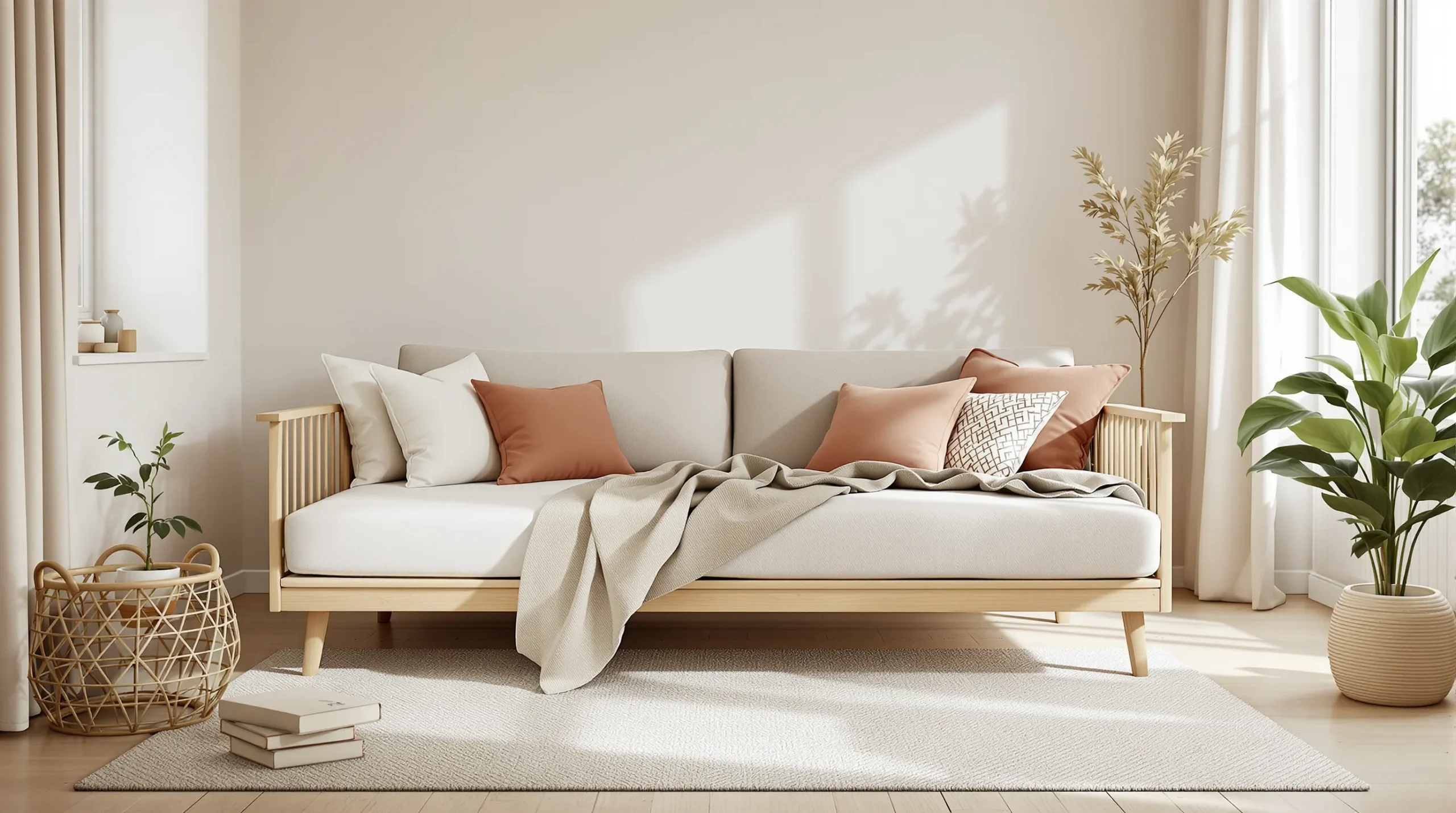
A daybed works as a sofa against the wall, and the trundle underneath pulls out to a second bed — two sleeping spots on the footprint of one narrow couch. Great for a home office that doubles as a guest room.
9. A storage headboard
The wall behind your pillow is dead space. A headboard with built-in shelves or cubbies turns it into a nightstand, a bookshelf, and a charging station without adding an inch to the room's footprint. Our small bedroom ideas guide has more on squeezing storage into a tight bedroom.
Seating that hides storage (10–13)
Every seat in a small room can be a container too.
10. A storage ottoman
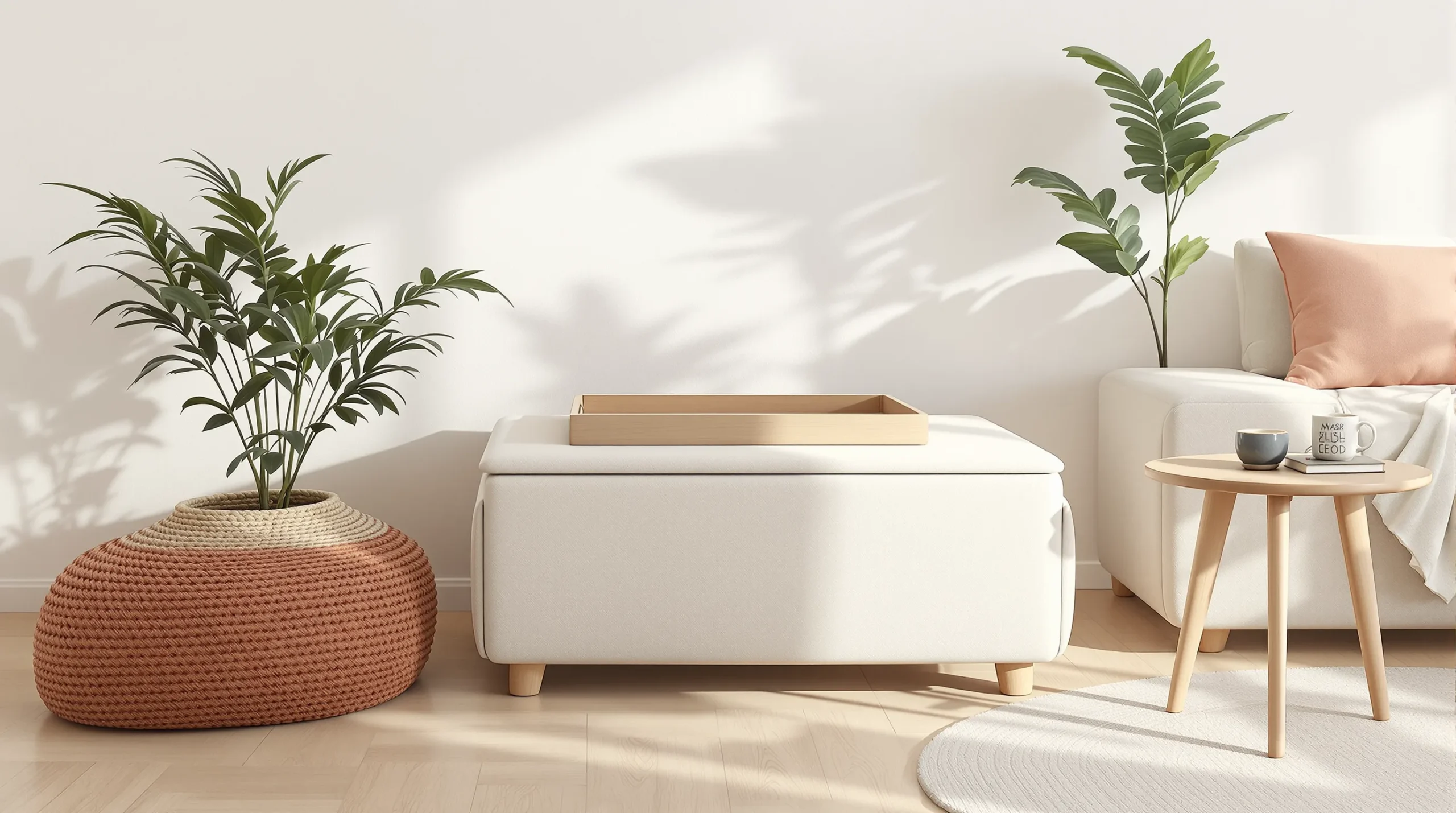
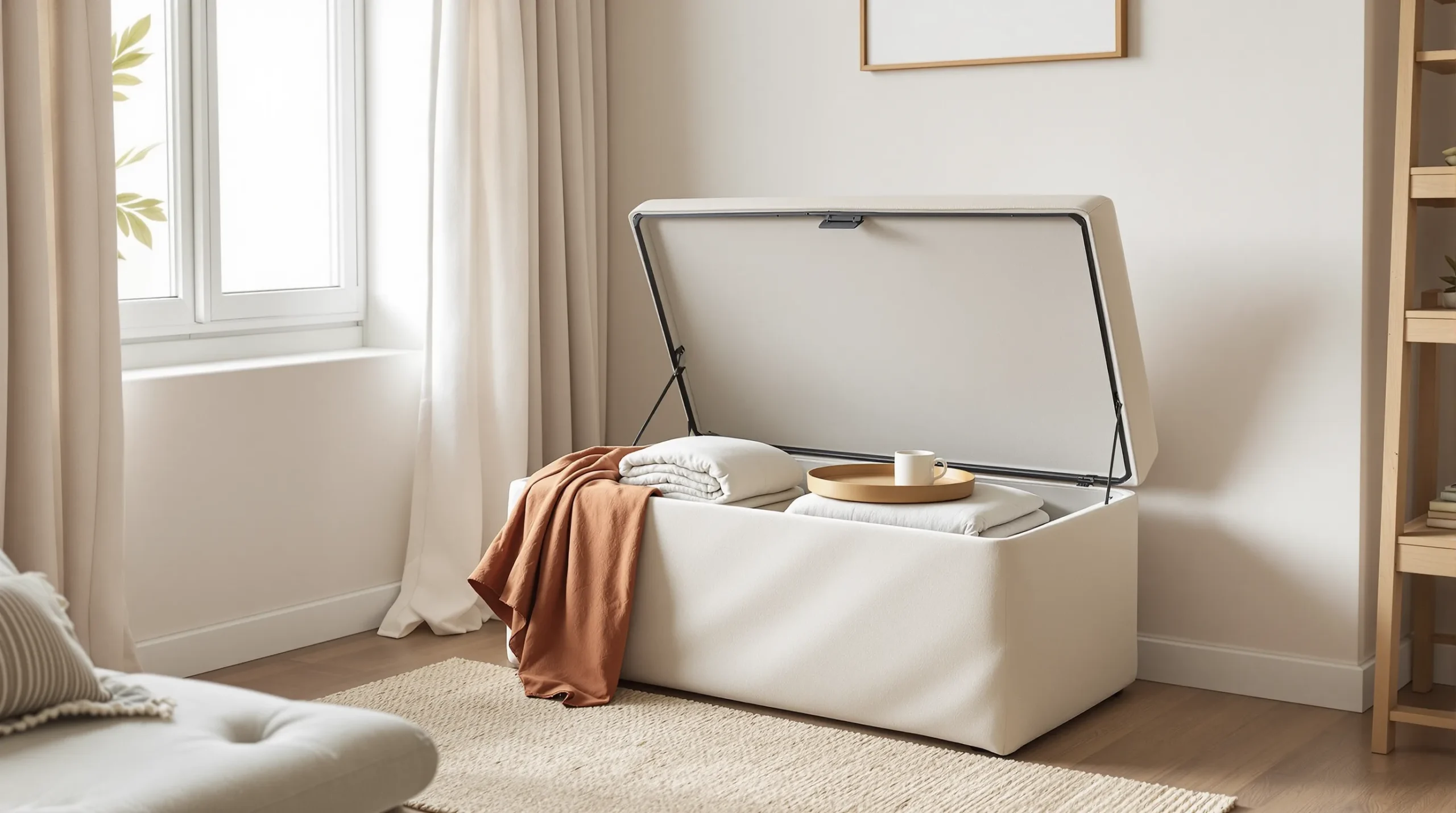
The hardest-working small object you can buy: it's a footrest, an extra seat, a coffee-table-with-a-tray, and a trunk that swallows 30-plus gallons of blankets or clutter, all in one. It's freestanding, cheap, and renter-safe — the easiest place to start.
11. A modular sofa with hidden storage
Modular (or "sectional-in-pieces") sofas reconfigure to fit any wall, some hide storage under the seats, and — the renter bonus — they come apart to move through narrow doorways and up tight stairs. Buy the size the room takes today and rearrange it in the next apartment.
12. Nesting stools or poufs
A pair of small poufs or nesting stools slide under a console or a bench and pull out as extra seats when friends come over. They weigh nothing, cost little, and vanish the rest of the week. For more on seating a small lounge, see our small living room ideas.
13. A storage bench
By a door or the foot of the bed, a bench gives you a place to sit and put on shoes, and lifts or opens to store the shoes, bags, and blankets that clutter a small entry. Two jobs, one narrow footprint.
Surfaces that transform (14–19)
Tables are where the disappearing act shines.
14. A lift-top coffee table
The top raises and slides toward you to become a laptop desk or a dinner table, and the space underneath hides remotes, chargers, and clutter. In a studio it quietly replaces a desk, a dining table, and a storage chest with one piece.
15. A drop-leaf or gateleg table
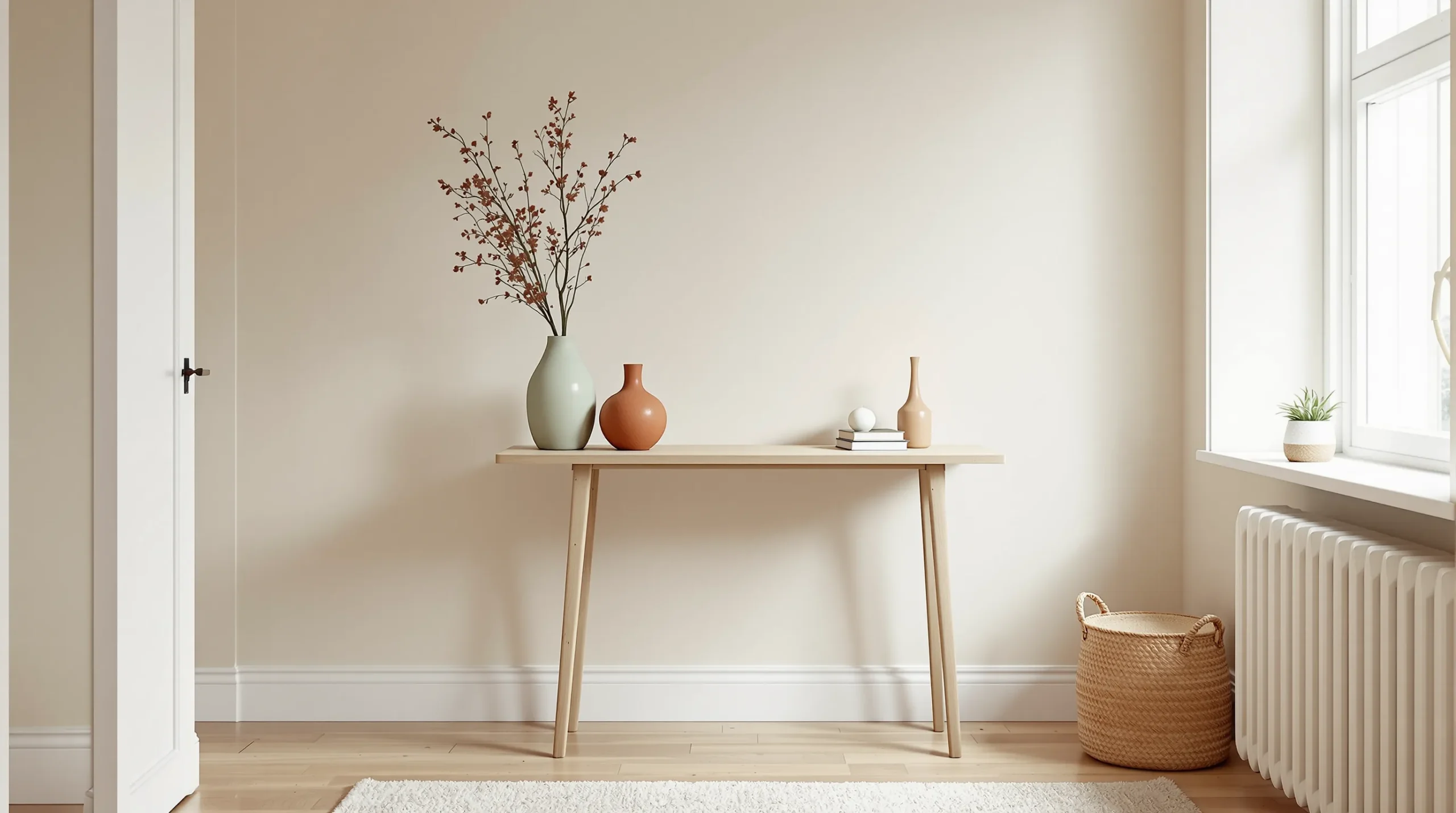
The best transform-and-disappear trick in the house. IKEA's NORDEN gateleg folds down to a 10¼-inch console you can line against a wall, then opens to a 59⅞-inch table that seats four — a six-fold swing, with six drawers built into the middle (IKEA). Console on weekdays, dinner party on weekends.
16. A console-to-dining or expandable table
A cousin of the gateleg: a slim console that lives against the wall for two and pulls apart to seat six with leaves you store inside. If you host but eat solo most nights, this is the table that fits both realities.
17. Nesting tables
A set of two or three tables that tuck under each other take up one footprint but give you three surfaces — spread them around the room for guests, then stack them back into one. Endlessly flexible, zero commitment.
18. A fold-down wall table
In a truly tiny kitchen or a studio, a table that drops down from the wall for meals and folds flat afterward gives you a dining spot without a permanent one. Freestanding drop-leaf-on-a-bookshelf versions exist for renters who can't mount to the wall — more in our tiny kitchen ideas.
19. A bar cart
Not just for drinks: a rolling cart is a mobile surface and open storage that wheels to wherever you need it — a bar for a party, a bedside table, a coffee station, an extra prep surface — then rolls out of the way.
Desks and storage that fold away (20–24)
The last group earns its keep by not being there most of the time.
20. A fold-down wall desk
A wall-mounted drop-leaf desk like IKEA's NORBERG folds to a flat panel with zero floor footprint when you're done working (IKEA). The one catch for renters: it needs mounting, so check your lease — and if drilling's out, a freestanding folding desk gives you the same disappear-at-night trick. Our small home office ideas guide covers the whole renter setup.
21. A secretary desk
A secretary desk is a slim cabinet that opens to a full work surface and closes to hide the laptop, cables, and paperwork behind a door — so the "office" disappears into a piece of furniture at the end of the day. Freestanding and fully renter-safe.
22. Vertical and stackable storage
When the floor's full, go up. Tall, narrow shelving, stackable crates, and stackable drawer units store far more per square foot than anything wide and low. A small footprint that reaches the ceiling beats a big one that hugs the floor.
23. Over-the-door organizers
The flattest unused real estate in any apartment is the back of a door. An over-the-door rack or pocket organizer adds a pantry, a closet, or a supply station using inches that were doing nothing — and it lifts off cleanly at move-out.
24. A rolling storage cart
The most flexible piece I own is a $30 rolling cart. In my studio it has been a pantry beside the kitchen, a nightstand next to the bed, and a mobile office that rolled into the closet at 6pm. Before it, I nearly bought a wall-mounted Murphy bed I couldn't legally install — then I measured the open projection against my floor plan, realized it would eat the only walkway, and put the money toward the cart and a freestanding cabinet bed instead. Measure the open footprint first; buy the piece that earns its floor. (For zoning a whole studio around pieces like these, see our studio apartment layout guide.)
Space-saving furniture mistakes to avoid
- Buying for the closed size — the open footprint is the real one; measure it first.
- A Murphy bed you can't legally mount — check the lease before you buy; reach for a freestanding cabinet bed if drilling's out.
- Choosing the gadget over the function — a piece that looks clever but is a pain to transform gets left in one position forever.
- The 20-in-1 transformer — a table that claims to do everything usually does none of it well; two solid jobs beats twenty flimsy ones.
- Forgetting the clearance — you also need the floor to open it; a fold-out bed with nowhere to fold out is just a cabinet.
- Getting the depth wrong — a 41-inch sofa bed instead of a 37-inch one is four inches of walkway gone; in a studio, depth is everything.
Frequently asked questions
What furniture saves the most space?
The pieces that either do several jobs at once or fold away when idle. The biggest wins are a storage bed (a bed plus a dresser), a sofa bed (a couch plus a guest room), a gateleg or drop-leaf table (a console plus a dining table), and a storage ottoman (a seat, a table, and a trunk).
Are Murphy beds renter-friendly?
Usually not by default — most wall beds have to be anchored to the wall, which needs your landlord's approval. The renter-safe swap is a freestanding cabinet bed, which folds a real mattress out of a self-contained box with no wall attachment, or simply a sofa bed or a storage bed.
Sofa bed or Murphy bed?
A sofa bed is freestanding and needs no drilling, but it gives you a sofa you sit on daily and a firmer mattress. A Murphy bed frees more floor by day and sleeps better, but it projects seven-plus feet when open and usually needs mounting. Renters lean sofa bed or cabinet bed; owners with a dedicated wall lean Murphy.
What's the best multifunctional furniture for a small apartment?
Start with the biggest pieces, since they earn the most: a storage bed or sofa bed, a lift-top or gateleg table, and a storage ottoman. Pick each one with the "does it earn its footprint?" test — two jobs or it folds away — and you can't go far wrong.
How much space does a Murphy bed need?
More than the closed cabinet suggests. A vertical queen projects roughly seven to seven-and-a-half feet from the wall when down, and you should leave two to three feet of standing room in front to open it, plus a walkway around it. Measure that open footprint against your floor plan first.
Is space-saving furniture worth it?
Yes — if each piece genuinely earns its footprint. A storage bed, a sofa bed, and a gateleg table pay for themselves in reclaimed floor every day. Skip the novelty "transformers" that do a dozen things badly; buy the pieces that do two things well.
Buy by the job, not the gadget
Space-saving furniture isn't about clever gadgets — it's about making every piece earn the floor it stands on. Pick things that do two jobs or fold away to nothing, measure the open footprint before you buy, and lean on freestanding, reversible pieces so your setup moves with you and your deposit stays intact. Do that, and a small apartment stops feeling full and starts feeling considered.
Measure your biggest piece's open footprint this weekend and start there. Then grab the free small-space checklist for the space-saving furniture shopping list, and save the ideas from our Small Space Storage Solutions board. Furnishing the whole place? See our studio apartment layout and small living room ideas guides.
Written by Nourddine, founder of Calm Square Feet, where he shares warm-minimalist, renter-friendly ideas for small apartments and studios. More about me.
Sources
- IKEA, FRIHETEN Sleeper Sofa, retrieved 2026-07-06, https://www.ikea.com/us/en/p/friheten-sleeper-sofa-skiftebo-dark-gray-90341151/
- IKEA, NORDEN Gateleg Table, retrieved 2026-07-06, https://www.ikea.com/us/en/p/norden-gateleg-table-birch-90423887/
- IKEA, NORBERG Wall-Mounted Drop-Leaf Table, retrieved 2026-07-06, https://www.ikea.com/us/en/p/norberg-wall-mount-drop-leaf-tbl-w-storage-white-20497928/
- Amerisleep, Murphy Bed Sizes & Dimensions Guide (open-projection & clearance ranges), retrieved 2026-07-06, https://amerisleep.com/blog/murphy-bed-sizes-and-dimensions-guide/